The Rise of Healthy Cities: Connecting Buildings, People and Communities
At the 2026 IWBI Healthy Building Policy Summit, leaders in public health, architecture, urban planning and sustainability came together to explore how healthier buildings can help shape healthier, more resilient cities.

What does it take to build cities that put people’s health and well-being at the heart of urban life? And what if we stopped thinking of buildings as isolated structures and started seeing them as gateways to our neighborhoods, communities and cities?
These were the big questions Uwe Brandes put to the room as he opened the panel, The Rise of Healthy Cities: Buildings, Infrastructure and Urban Resilience. A renowned scholar who directs Georgetown University’s Urban & Regional Planning Program and Georgetown Global Cities Initiative, Brandes brought together an unlikely trio: a child psychiatrist, a healthcare architect and a building sustainability executive.
Their challenge? To explore how the lessons of healthy buildings could help us reimagine the places where we live, work and connect—and offer practical ideas for building healthier, more resilient communities.
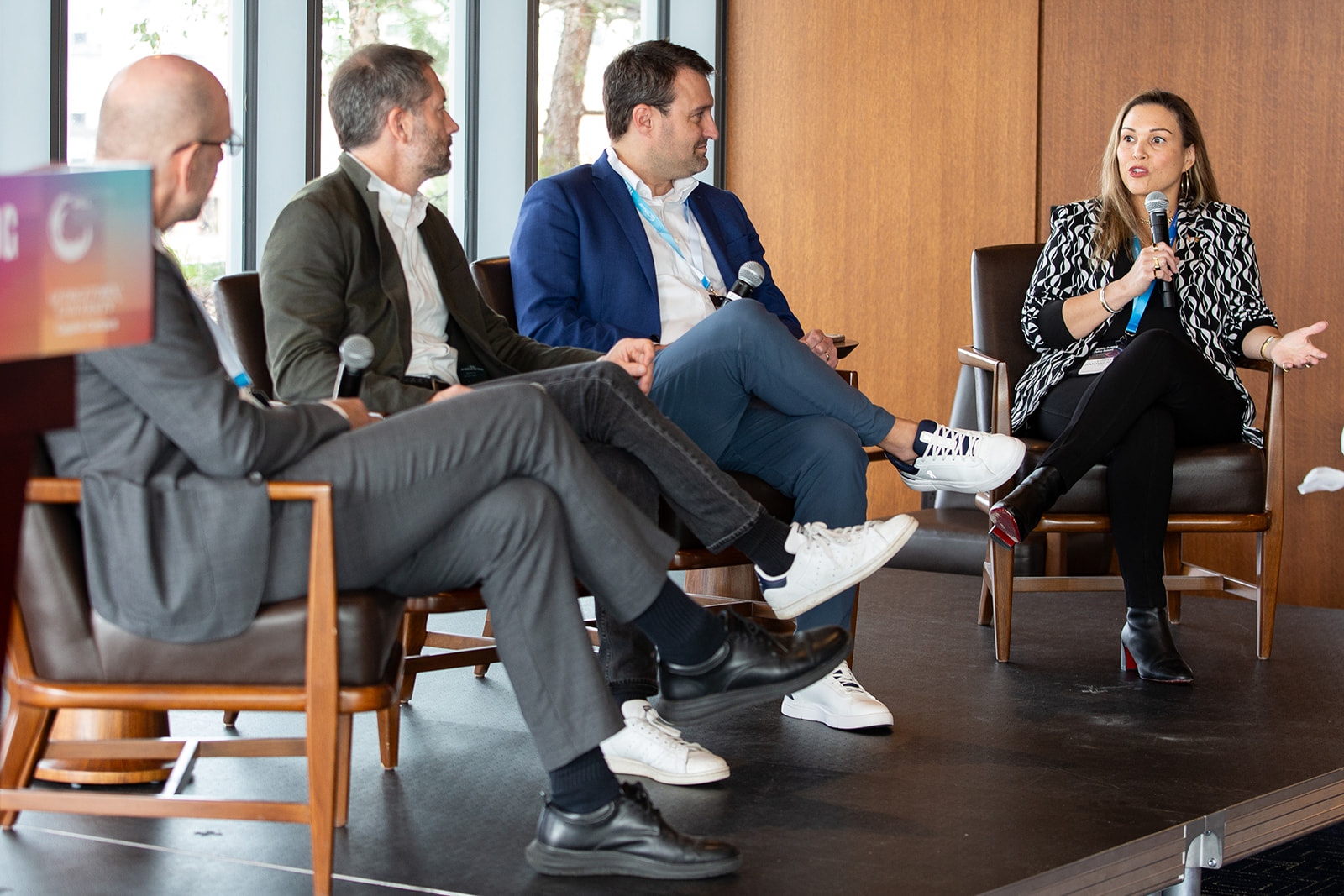
The conversation was as engaging as it was wide-ranging. With moments of laughter and plenty of food for thought, the panelists drew on their very different experiences to connect the dots between buildings, neighborhoods, public spaces and the larger systems that shape everyday life.
Despite their different disciplines, a common thread emerged: Creating healthier cities starts with understanding the people who inhabit them—and recognizing how the spaces around us influence their lives.
Connecting the built environment to human development
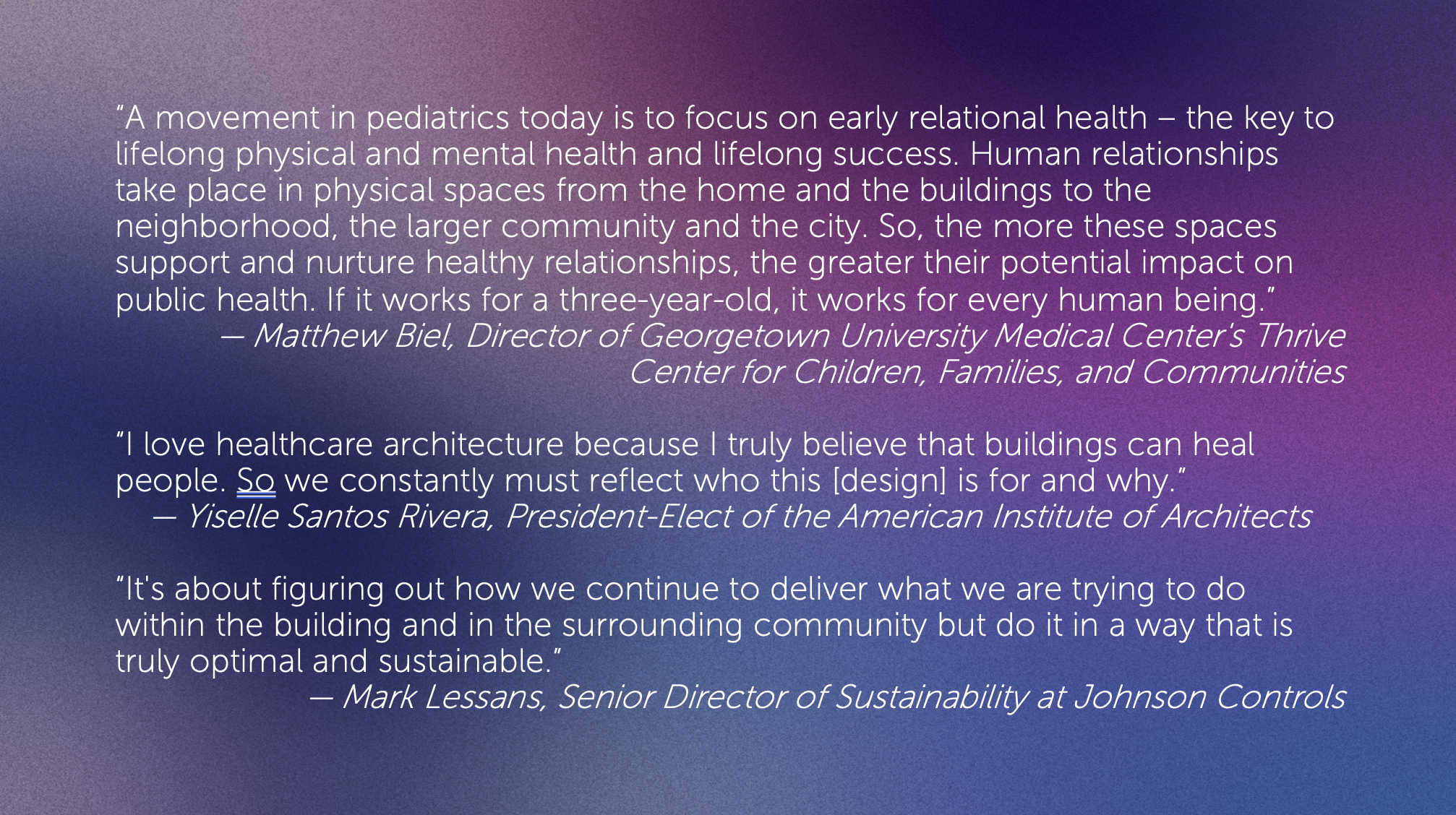
What can a three-year-old teach us about designing healthier cities? Quite a lot, according to Matthew Biel.
Bringing a child development and mental health perspective, Biel explained how early relationships shape children’s long-term well-being—and how the physical environments where those relationships unfold can either support or undermine healthy development. Excessive household noise and chaotic surroundings, for example, can interfere with brain development, while access to green spaces can help reduce stress.
He also highlighted Urban95, an initiative that encourages planners to experience cities from the height of a three-year-old. By considering how young children and caregivers navigate sidewalks, parks, transportation and public buildings, cities can create safer, more accessible and welcoming environments for everyone.
Advancing health and sustainability together
Can buildings become more energy-efficient without compromising the health and comfort of the people inside them?
From a building technology perspective, Lessans challenged the notion that decarbonization and indoor environmental quality must compete. Advances in building technologies, he noted, increasingly allow both goals to be pursued together.
He also pointed to building performance standards as a model for setting measurable environmental goals while giving owners flexibility in how to achieve them—an approach that could also help advance indoor environmental quality. But the bigger challenge may be changing established practices and encouraging building stakeholders to look beyond individual responsibilities toward shared community outcomes.
Putting people at the center of design
For Yiselle Santos Rivera, healthcare architecture offers a powerful example of how thoughtful design can improve lives.
She shared the story of two Delaware healthcare systems that collaborated to establish a small labor and delivery suite, reducing the need to transport high-risk newborns between facilities. Though modest in size, the project required extensive coordination across institutions and clinical teams, demonstrating how a relatively small design intervention can address a much larger healthcare challenge.
Santos Rivera also championed inclusive design, urging architects to consider the diverse ages, abilities and circumstances of the people who use buildings and public spaces. Her message: Good design begins with understanding who we’re designing for—and why.
Looking beyond individual buildings
The health of a community is shaped by what happens inside buildings and by the connections between them—sidewalks, parks, transportation, healthcare services and the many shared spaces where daily life unfolds.
Throughout the discussion, the panelists showed how seemingly different priorities—child development, building performance, healthcare access, inclusive design and environmental sustainability—are deeply interconnected.
And perhaps that was the most compelling takeaway from the session: The path to healthier cities doesn’t begin with a single building, technology or policy. It begins with bringing people and disciplines together, asking better questions and looking beyond the boundaries of individual buildings.