IWBI Signature Interview Series: A Conversation with Jason DiBona on the Future of Healthy Indoor Air

For far too long, indoor air quality has largely been invisible and only something people noticed when something went wrong. But that’s changing. As organizations place greater emphasis on health, resilience and human performance, the quality of the air we breathe has become a defining feature of healthy buildings and healthy organizations.
Few people have been as committed to advancing that conversation as Jason DiBona, CEO of Molekule and a Commissioner on the Global Commission on Healthy Indoor Air. Throughout his career, spanning healthcare, medical technology, building innovation and global business leadership, DiBona has focused on leveraging the science of indoor air to create practical solutions that improve people’s everyday lives. Under his leadership, Molekule has continued its mission of helping organizations better understand, manage and improve indoor air through advances in air purification, intelligent monitoring and data-driven technologies.
In a Facility Management Journal article, “Breathing Life into Workplaces,” DiBona makes a compelling case that indoor air quality is a business, health and workforce issue. From wildfire smoke and airborne disease to cognitive performance and employee confidence, he argues that organizations have an opportunity to move beyond reacting to problems and instead proactively create healthier, more resilient indoor environments. We recently sat down with Jason to discuss why indoor air quality has reached a turning point, the role technology can play in accelerating progress and where he sees the greatest opportunities for healthier buildings in the years ahead.
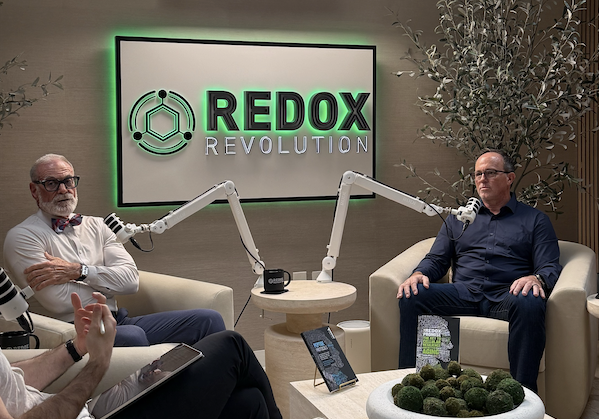
Q: Throughout your career, you’ve worked at the intersection of healthcare, technology and the built environment. How has that journey shaped your perspective on the role buildings can play in protecting health and helping people perform at their best?
My career taught me to look at health more broadly, not just as something we address when people become sick, but as something we can influence through the environments in which they live and work. Some of the most important healthcare interventions don’t happen inside the walls of a hospital. They happen in the air of the buildings we inhabit every single day.
What bridged those worlds for me was recognizing the profound impact of environmental precursors. The invisible pollutants we inhale 20,000 times a day can influence human health long before someone ever steps foot into a doctor’s office or a clinic. We spend 90% of our lives indoors, yet in our push for energy-efficient, tightly sealed buildings, we have inadvertently created environments that can trap VOCs, harmful pathogens and particulate matter. The result is that the very places designed to protect and support us can sometimes work against human biology.
That realization brought me to Molekule. I saw an opportunity to take what we know from clinical science and technology and apply it to the places where people spend most of their lives, to elevate human health and performance at scale by transforming the built environment from the inside out. The future of indoors isn’t just about shelter. Buildings should do more than house us; they should actively contribute to our health and longevity. That means moving from passive spaces to environments that can continuously sense, respond and protect the people inside them.
Q: You often describe indoor air quality as force multiplier for health and well-being. What has convinced you that healthy indoor air is becoming a strategic priority for organizations?
The conversation has fundamentally shifted. Organizations once viewed indoor air quality purely through a facilities or compliance lens. The COVID-19 pandemic changed that forever. It served as a global wake-up call that proved indoor air is core to business continuity, risk management and human safety. Today, forward-thinking leaders recognize it not as a temporary emergency measure, but as an essential, permanent driver of human performance.
Healthy air is a force multiplier because it amplifies the benefits of everything else an organization does to support its people. We invest in wellness programs, ergonomics and mental health, yet often overlook the 30 pounds of air we process every single day (more than the food we eat and water we drink combined). You can think of clean air as the foundational baseline of your entire wellness stack.
Breathing unmanaged environmental precursors places the human body under constant metabolic stress, forcing it into defense mode rather than recovery mode. It is impossible to optimize cognitive focus, energy or resilience if the ambient environment is constantly working against you. Clean air works upstream, removing that invisible tax before performance is ever compromised.
Q: Your recent IFMA article highlights how advances in connected technologies and next-generation air purification are changing what’s possible. Where do you see technology making the biggest difference over the next five years?
The biggest shift over the next five years is moving from static air purification to air intelligence, and air intelligence is what drives air health.
By layering AI, advanced sensing and connected software onto purification and filtration technology, we give buildings the ability to predict and mitigate threats before they impact human well-being. Imagine an environment that senses approaching wildfire smoke, identifies elevated off-gassing, or isolates pollution sources, automatically adjusting its systems to neutralize threats in real time.
Air quality is a metric. Air intelligence is the system. Air health is the outcome. The future will be led by technologies that make buildings truly responsive: quietly and continuously protecting human health everywhere we spend our lives.
Q: As a Commissioner on the Global Commission on Healthy Indoor Air, you’ve joined leaders from around the world working toward a shared vision for healthier indoor environments for everyone, everywhere. Looking ahead, what gives you the greatest optimism that we can accelerate progress and make healthy indoor air the norm rather than the exception?
My optimism comes from the fact that this is no longer a conversation being driven by one company, one industry or one country. We are seeing a genuine global shift in how people think about the relationship between the environments we inhabit and our health.
I feel incredibly honored and privileged to be part of the Global Commission on Healthy Indoor Air and to sit alongside leaders from around the world and across a diverse range of disciplines. Seeing what many of them are doing in their own domains through public health policy, building standards, research and education makes it hard not to be optimistic. There is real momentum, and importantly, it is translating into action.
We are also seeing a broader wellness movement where people are asking more questions about the environmental factors that influence their health. People track everything from HRV to nutrition and sleep, and we are finally beginning to pay more attention to the environment around us. Indoor air is a particularly important part of that conversation because it is something we are exposed to continuously, often without realizing it.
What gives me even more confidence is the convergence of awareness, science, policy and technology. We have a much better understanding today of the connection between indoor environments and human health, and we are increasingly developing the tools to act on that knowledge. There is still a tremendous amount of work to do, but I find it encouraging that the conversation is moving from awareness to accountability and, increasingly, to action. My hope is that healthy indoor air eventually stops being viewed as a premium amenity and becomes recognized for what it really is: a fundamental part of a healthy environment and, ultimately, a healthy life.