What Survived the L.A. Wildfires
Rebuilding to protect health and defend against future climate disasters

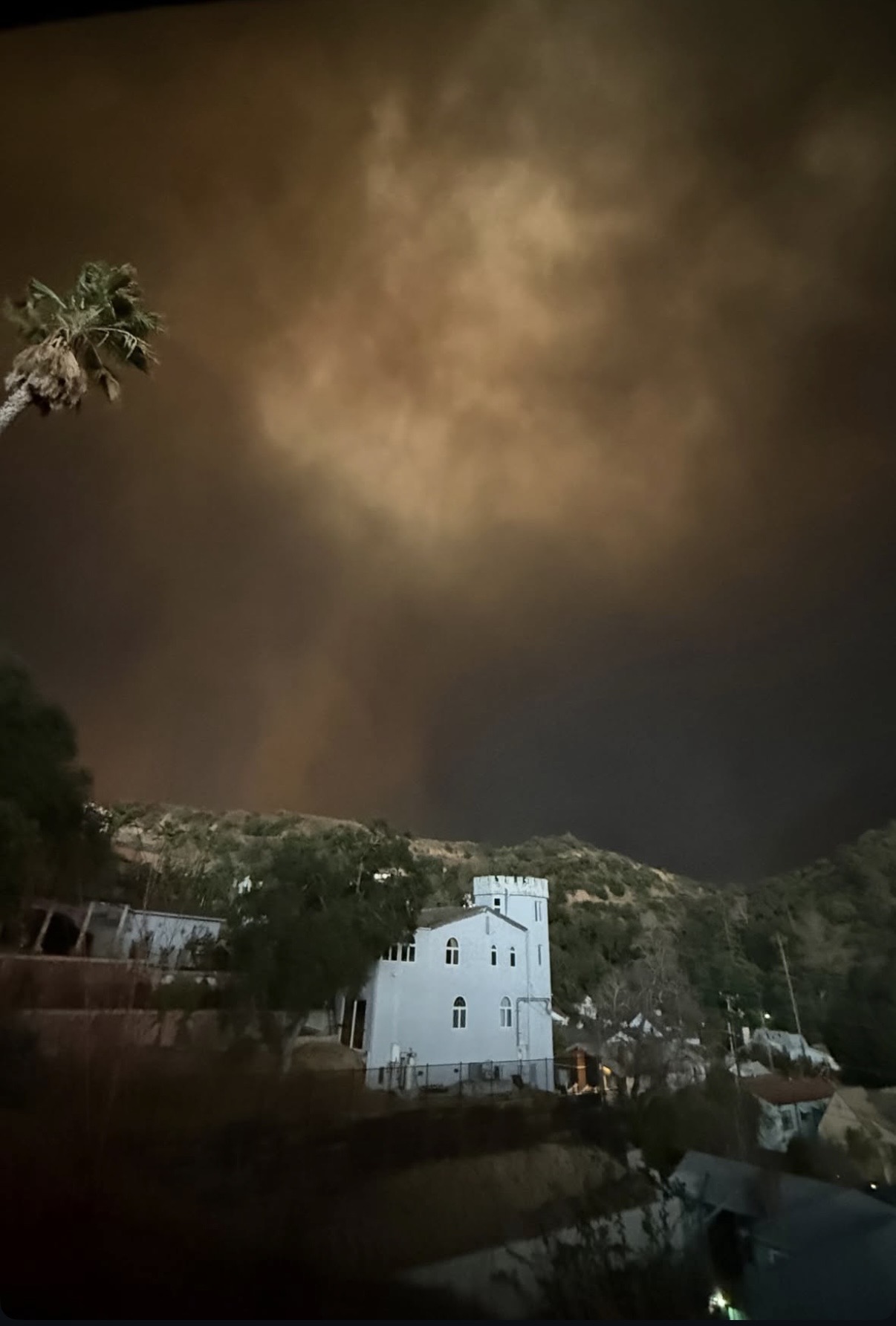
The stark images of a single home standing amid charred ruins of its neighbors are an apocalyptic memory of the Eaton and Palisades fires across Los Angeles in January 2025, 18 months ago. There was one house left standing in Malibu. Another in Altadena. One more on the westside of Los Angeles. Fewer than a dozen homes were built to resist the raging fires that devastated 40,000 acres across L.A., $30 billion worth of real estate and over $200 billion in capital losses. Insured losses were estimated at $45 billion, an indicator of many homes being uninsured or underinsured.
But how did those few houses manage to survive? And what can they teach homeowners set on rebuilding on their property in designated high-risk wildfire zones? Today, at least 44 million homes in the United States are sited in vulnerable areas - what’s called the “wildland urban interface” (WUI) - either because of homeowners’ desire to live closer to nature or because housing prices are more affordable.
Material Defense
One home in the Palisades was constructed to be fire-resistant after its owners lost their first home to wildfire in 1993. Theirs was rebuilt with steel-reinforced walls and a metal roof. Walls trimmed in cinderblock protected the seams where walls meet the ground, preventing flaming debris from blowing indoors. Notable is what’s missing from the home: eaves and roof vents which can trap heat or allow burning embers, which start fires from inside the house. Plants and brush growing near the home are cleared weekly. While all the grass and bushes in the yard were singed to nothing, the house survived where neighbors’ homes burned to the ground. Native plants, acting as natural firebreaks, can protect buildings from wildfires by singing rather than igniting, thus slowing the spread of fire.
Other homes that stood post-wildfires were largely brand new, built after 2008 California Chapter 7A rules passed, which upgraded codes to require fire-resilient features to protect structures built in wildfire prone areas. They also had vegetation-free zones around the yard, fenced off by a solid concrete perimeter wall, metal roofs with a fire-resistant underlay, and covered chimneys to prevent burning embers from slipping indoors. Some used Class A wood, which provides the highest level of fire resistance. The lone-standing home in Malibu was concrete with a fire-resistant roof and tempered double-paned windows.
Wildfire-Hardened Homes
Not all homes hardened against wildfires survive. “There are lots of examples of homes that have done everything right, but when you’re fighting millions of wind-borne embers that are flying through gusts of 70-mile per hour winds, it’s hard to keep one from going underneath your garage door,” says Alexandra Syphard, a research ecologist who studies wildfires.
The WELL for residential certification includes Fire Mitigation as a strategy for improving home safety, as the “majority of all fire injuries and fire-related deaths occur in residential buildings” and because “homes located in wildland-urban interface zones and similar areas have an increased risk of experiencing a wildfire.”
A fire suppression system may not save a home, but it will slow down a fire enough to give occupants extra time to evacuate. The key is to well-maintain such systems. One system in the Pacific Palisades with “heat and flame detectors, fire retardant, a 2,500 gallon sprinkler system to soak the property and humidify the air for an hour, and autonomy from the power grid,” slowed the fire, but didn’t save the house. Some of the sprinklers were clogged. But it was the home’s position on a canyon-edge exposed to flames racing uphill that overwhelmed the home’s extensive protective device. Where housing gets sited is a major determinant of wildfire destruction.
The Best Defense: Community Collaboration
Since wildfires are a chain reaction event, leaping quickly from one structure to the next, the most effective defense is a whole cluster of wildfire-hardened homes. A group of forward-thinking neighbors in Altadena are working together to rebuild their homes using Passivhaus methodology, in this age of climate change where droughts last longer and fire conditions are intensifying.
Homes built using Passivhaus are airtight, keeping out smoke and toxic ash, and highly insulated, which reduces the need for air conditioning and heating. It also makes maintaining high quality indoor air an imperative. Many are built all electric for health and safety reasons, omitting reliance on fossil fuels. WELL for residential also advises homeowners to minimize combustion or eliminate combustion-based products altogether from the home, as doing so significantly reduces “combustion byproducts including carbon monoxide, nitrogen oxides sulfur oxides, volatile organic compounds and particulate matter” - exposure to which can lead to negative health effects such as asthma symptoms.
Short of collaborating with neighbors on brand new rebuilds with all fire-resistant materials, there are simple low-cost steps that neighbors can decide to implement together, which can dramatically reduce their homes’ vulnerability to fire. Steady maintenance and smart strategies include:
- Closing a fireplace flue during wildfire season
- Relocating firewood at least 30 feet from the house
- Installing metal gutter guards
- Enclosing under-deck areas with metal mesh screening
- Clearing dry vegetation from property
- Replacing mulch within five feet of buildings with non-combustible dirt, stone or gravel
- Cleaning roofs, gutters, decks and the bases of walls regularly to avoid accumulating fallen leaves and other flammable materials.
An Opportunity to Strengthen
Rebuilding after widespread disasters such as the Eaton and Palisades wildfires is a slow process. Of over 22,500 homes destroyed in five of California’s most destructive wildfires between 2017 and 2020, less than 40% were rebuilt by 2025. Meanwhile, homeowners in the Pacific Palisades and Altadena who received unsatisfactory settlements from insurance companies, are selling their land to developers, who have reportedly purchased 44.6% of fire-damaged properties in these areas. For the homes that survived, there is significant smoke damage to clear as well as remediation of land strewn with debris and toxic chemicals. Eighteen months after the wildfires, renewal and rebuilding continues to be an uphill battle.
The California Wildfire Rebuilding Guide, developed by U.S. Green Building Council-California with support from Arup, contains more information for homeowners making critical decisions while rebuilding. There is also new construction using low-cost methods such as prefabricated, factory built modules that are joined into a house on site. The Altadena Prefab Showcase displayed modular homes costing just $292 to $362 per square foot compared with traditional builds that cost between $500 to $650 per square foot. Factory built modular housing also goes up on a quicker timeline, taking around 5-6 months to design and 6-8 weeks to install. Cosmic Buildings is utilizing robotic methods in its pre-fab builds that can frame a home in just 10 days and complete the build in 4-6 months. These modular builds incorporate materials and designs that improve structures’ fire resilience.
Affordable building methods combined with more resilient design and fire-hardened materials will hopefully improve upon and strengthen these communities’ structural defenses against wildfires, helping to improve long-term safety and public health in the process.