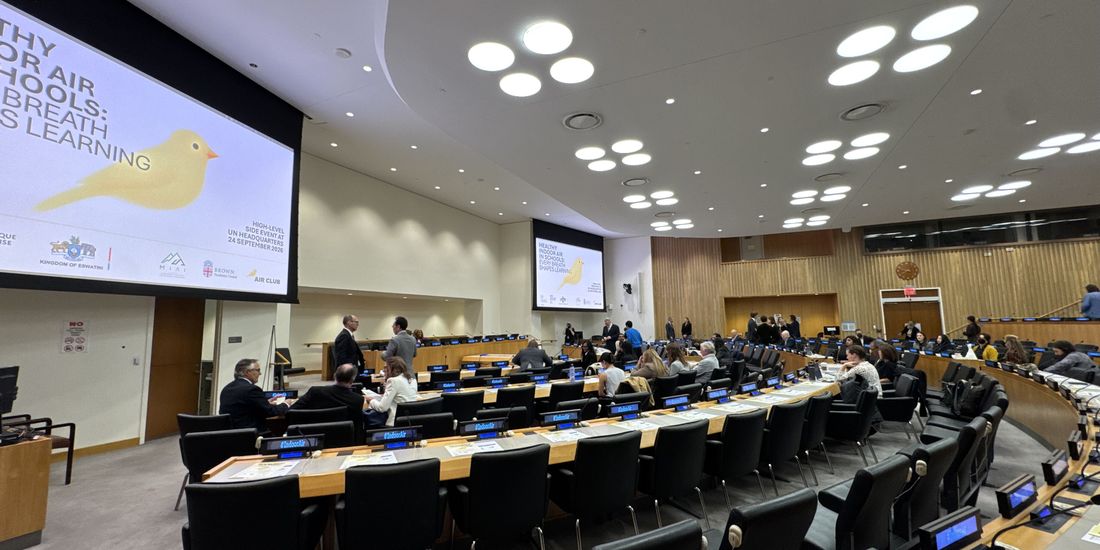
At UN Event, IWBI President and CEO Calls for Health-First Schools
UN High-Level Side Event explores one of the most overlooked levers in children's health and learning: the quality of the air they breathe in school

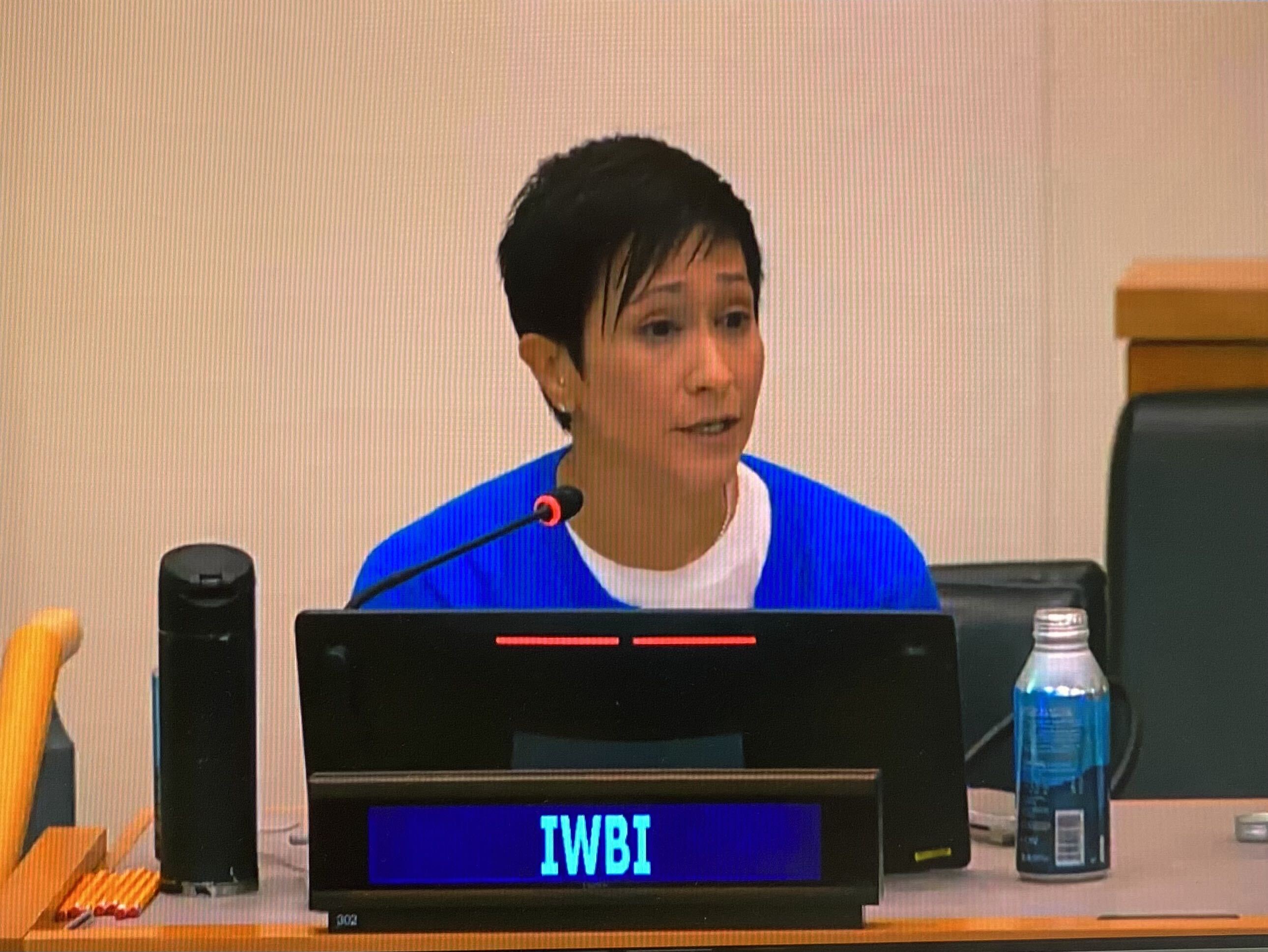
Building on the Global Commission on Healthy Indoor Air’s landmark launch of the Global Framework for Action, Rachel Hodgdon, President and CEO of the International WELL Building Institute (IWBI) and Co-Chair of the Global Commission, delivered an urgent call to action, encouraging leaders to deliver on a forward-looking “health-first agenda” for educational institutions worldwide.
Presented during today’s UN High-Level Side Event on Healthy Indoor Air in Schools: Every Breath Shapes Learning, Hodgdon’s remarks leveraged the Global Framework’s roadmap to drive systemic improvements in indoor air quality across learning environments.
IWBI was at the heart of convening the inaugural Healthy Schools for Healthy Kids Summit, a first-of-its-kind national gathering held in Washington, D.C. this past summer. Today, Hodgdon urged leading experts, advocates and policymakers to continue efforts to produce a forward-looking health-first agenda, focused on school modernization, healthy materials, indoor air quality and ventilation, emergency preparedness and resilience, healthy lighting and acoustics, pollution prevention, remediation of legacy environmental hazards, technical assistance for schools and communities, and priority research needs.
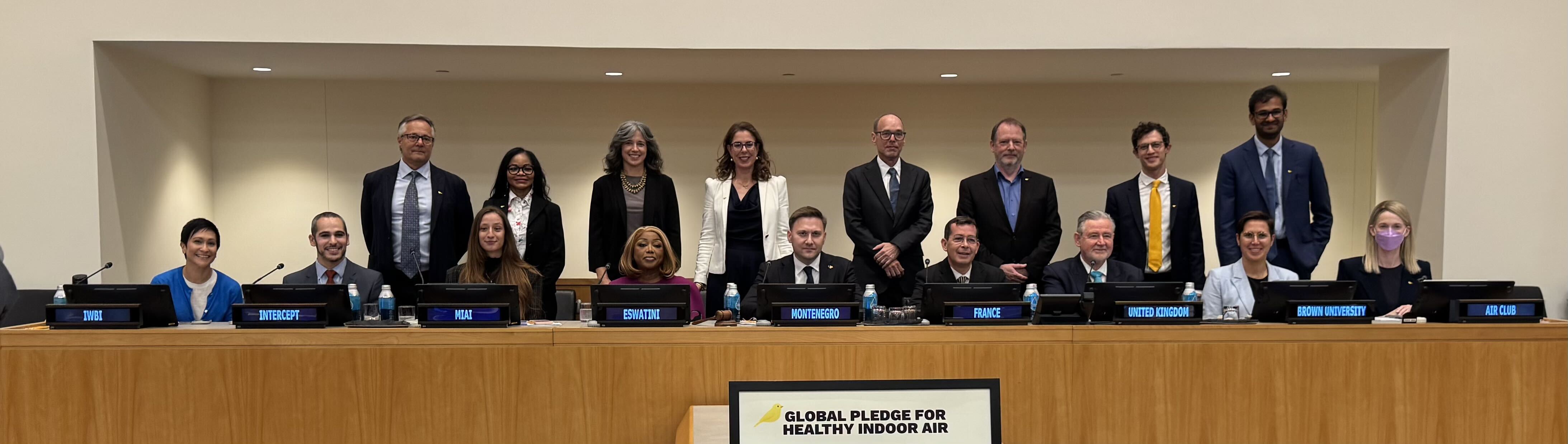
Also delivering remarks at today’s UN event were Ministers, MPs and senior officials from the governments of France, the United Kingdom, Montenegro and Eswatini. As well, fellow Commissioners Dr. Ian Longley of the Air Quality Collective and Air Club Co-Founders Dr. Georgia Lagoudas and Dr. Bronwyn King, alongside other global experts, collectively spotlighted the importance of indoor air quality across public health, education, biosecurity and climate resilience.
Read Rachel Hodgdon’s full remarks below or watch the recording of the UN High-Level Side Event on UN Web TV, Healthy Indoor Air in Schools: Every Breath Shapes Learning.
To learn more about the Global Commission on Healthy Indoor Air and its newly-launched Global Framework for Action, read the press release and visit the website.
I keep coming back to one word today: hope.
We have heard from so many inspiring speakers about the hope of a world in which everyone—no matter who they are or where they live—has access to healthy indoor air.
And what we are witnessing is more than momentum. It is a growing belief that we are rapidly approaching a global tipping point.
Last year, we came together around the Global Pledge for Healthy Indoor Air. And two days ago, the Global Commission launched the Global Framework for Action—a game plan for turning the fundamental human right of healthy indoor air into a reality.
And this gathering is another reason for hope. Government leaders, school districts, philanthropy, NGOs, industry and academia—all coming together to stand up for our schools.
Because when we talk about indoor air in schools, we are not talking about air for its own sake.
Healthy air is the entry point. Health is the purpose.
At IWBI, our singular focus is advancing a health-first agenda for the places and spaces where we live our lives. And nowhere is that more important than in our schools.
This summer, IWBI joined four other national organizations to host our Healthy School Summit, where we announced a health-first agenda for America’s schools.
And that word—first—matters.
For too long, health has been something important, but rarely urgent. Something that can wait.
But our children cannot wait.
I remember talking to a school district leader who told me about a little girl who, due to poor indoor air quality, was having asthma attacks day after day at school. Her family finally pulled her out and moved her to another district simply so she could be well enough to learn.
For that little girl, this wasn’t a facilities problem. This wasn’t a line item in a capital budget.
It was her life.
And that’s what urgency looks like.
For too many students and educators, health has been deferred to the next budget, the next capital plan, the next year.
But when health is delayed, health is denied.
We must also make our schools more energy-efficient, sustainable and resilient. Those goals matter enormously.
But when it comes to our children, they are the means, not the ultimate measure of success.
A school can meet an energy target and still fail a child who is struggling to breathe.
The ultimate measure is whether that building supports the health, well-being and learning of the people inside it.
The Global Framework gives us a path from aspiration to action. Now we need that same health-first commitment for schools around the world.
No child should have to trade their health for an education.
So today let’s make—and keep—one simple promise to every child:
Your health and well-being comes first.