Why Not Measure Building Performance in Laughter?
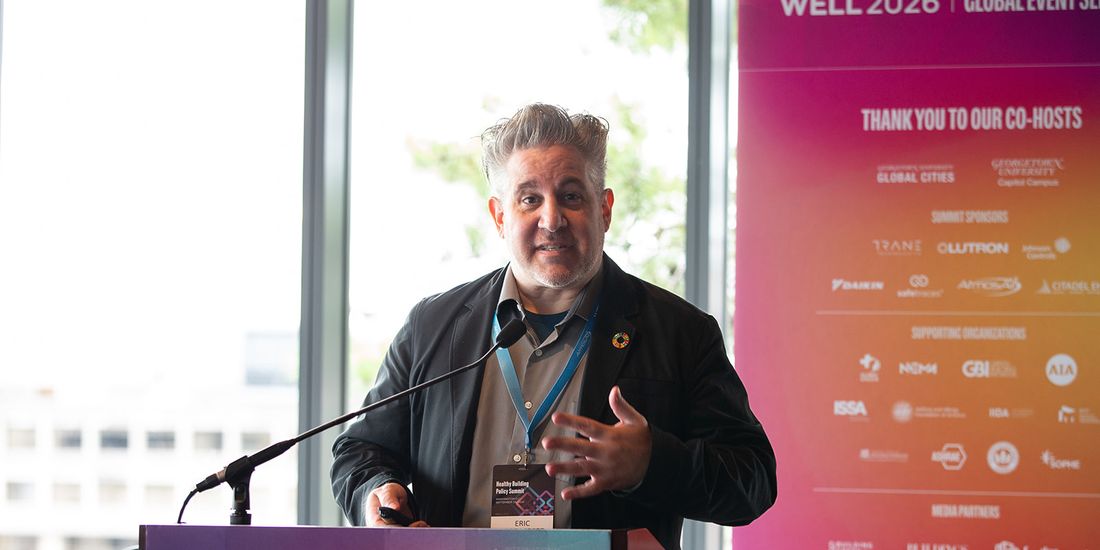
In a closing session equal parts satire and challenge, Eric Corey Freed asked why sustainability is still so hard to sell—and what happens when we lead with human health.

A compostable spoon that disappeared into a bowl of hot chili. A Prius heading off a cliff. The decibel level of laughter in a children’s hospital.
These might seem unlikely closing notes for a policy summit. In the hands of Eric Corey Freed, principal and sustainability director at CannonDesign, they became memorable arguments for rethinking what the building industry is trying to achieve.
His closing session, Rethinking Sustainability - Health for ALL, kept the room laughing while asking a piercing yet uncomfortable question: have we become so focused on explaining sustainability that we have forgotten to make people want the future it promises?
Sell the brownie, not the recipe
Freed’s disappearing spoon story captured the problem. A sustainable product that fails at its basic purpose gives people little reason to embrace it. Neither does a conversation buried in technical terminology and spreadsheets—what he called “Death by Excel.”
His alternative: “sell the brownie and not the recipe.” Lead with the experience people want and the outcomes they value. A healthier place to learn. A hospital that feels less frightening. A neighborhood where children can breathe more easily.
Science and engineering remain essential. The invitation is to make their benefits tangible.
Slowing down isn’t enough if you’re still heading off a cliff
Freed’s driving analogy landed with laughter, then a sharper point: reducing harm is not enough to deliver the future we need.
For buildings, that means moving toward design that actively supports health and restores the environments around it. He described how CannonDesign uses local health and environmental data to connect project decisions with community needs. A green roof, for example, becomes part of a response to identified conditions rather than simply an attractive addition.
What if we measured laughter?
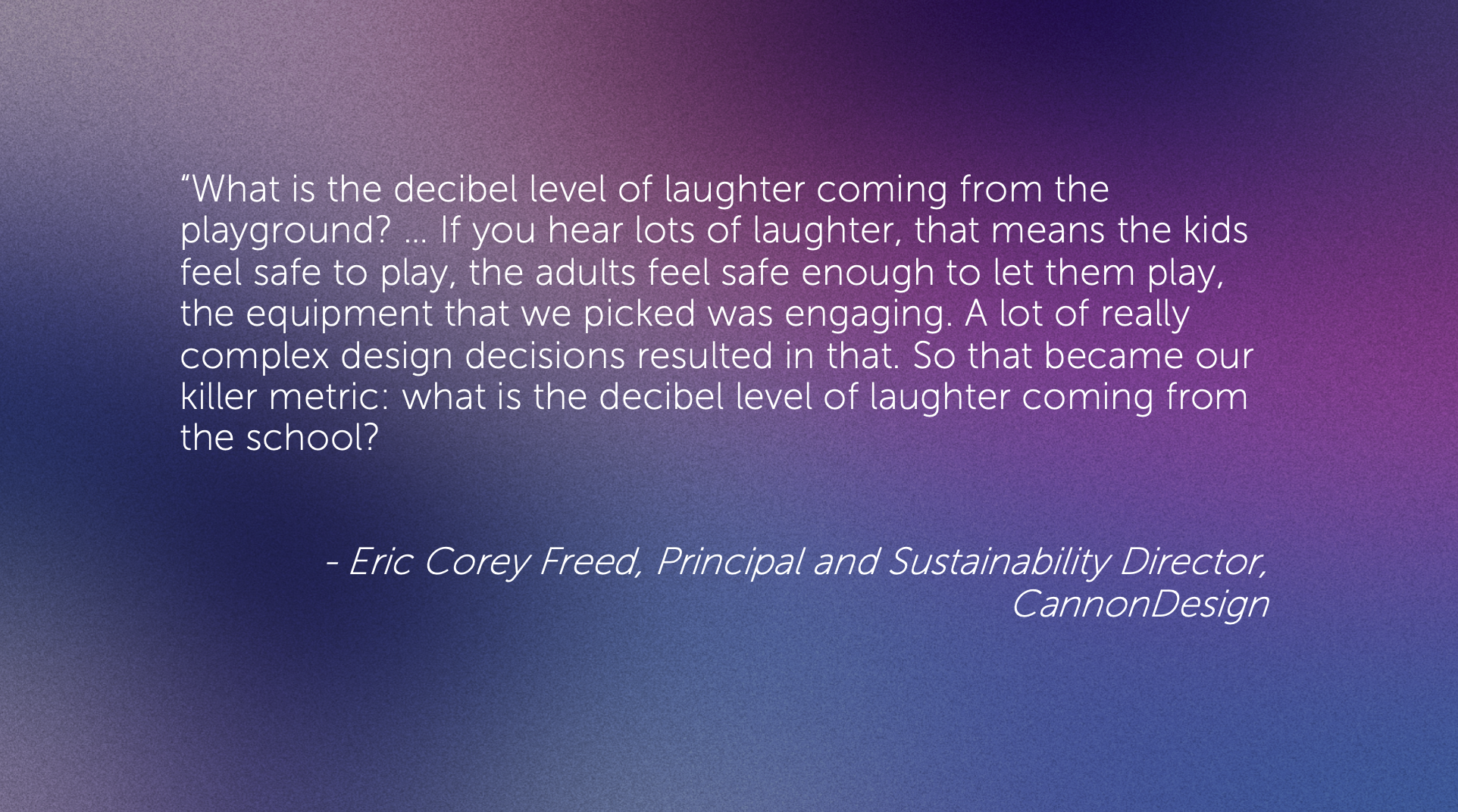
Some of the session’s most engaging ideas came from a deceptively simple request: develop measures an eight-year-old could understand.
Freed offered the number of butterflies or outdoor meetings, and, even better, laughter. Each makes complex design decisions visible through everyday experience. Outdoor spaces people actually use suggest that comfort, shade, acoustics and furniture are working together. Laughter on a playground can signal that children feel safe and engaged.
For one children’s hospital client, laughter in the hallways became an aspiration for the experience the building should create. These “illustrative indicators” gave human meaning to technical ambitions, offering a compelling answer to what success could feel like.
And what are we leaving out when we calculate cost?
Freed’s final challenge went to the heart of investment decisions. Purchase and operating costs tell only part of a building’s story.
He presented CannonDesign’s Life-Cycle Value Analysis, which also considers benefits for occupants, resilience and the surrounding community. The aim is to make those forms of value visible before a seemingly cheaper choice crowds them out.
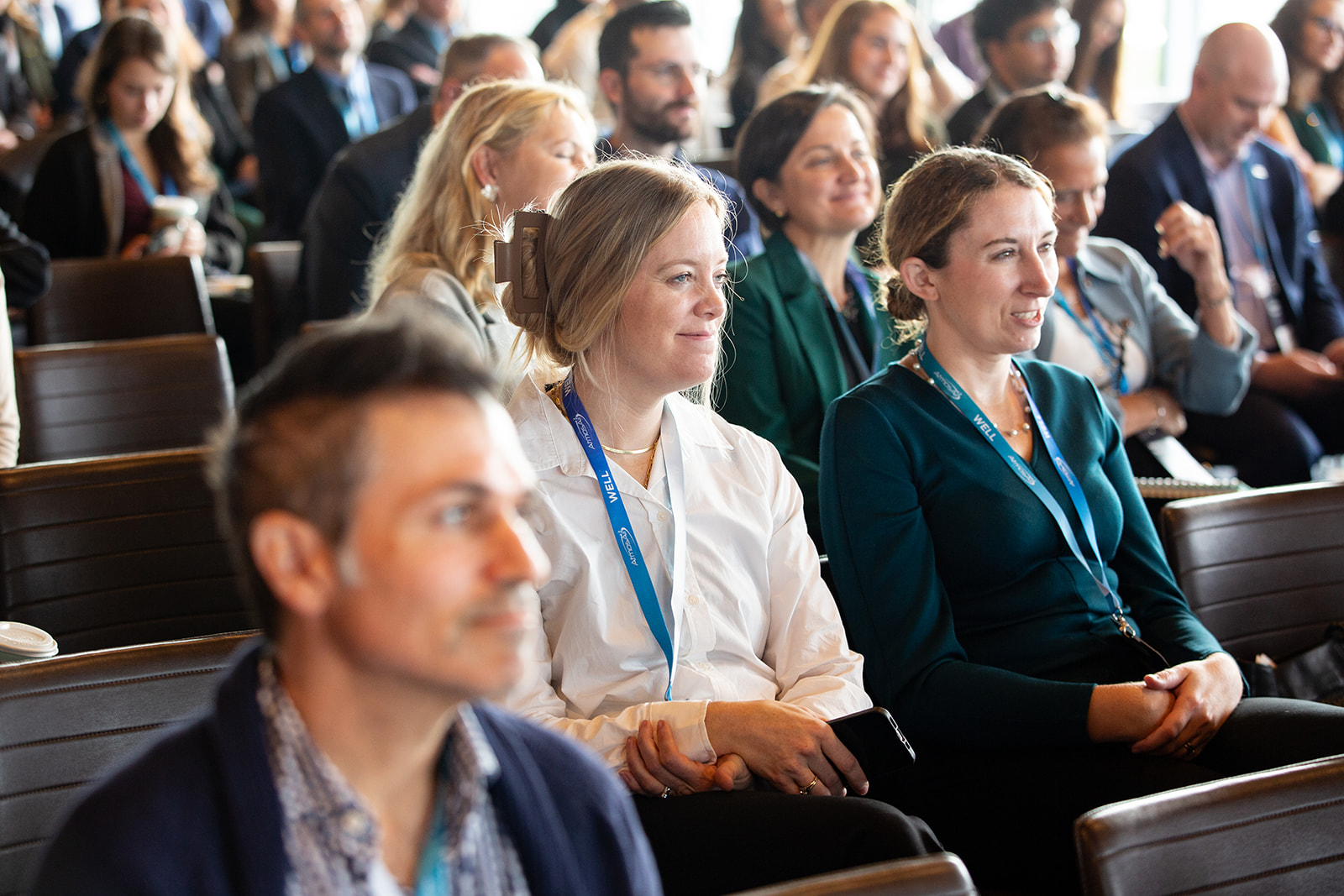
In an unforgettable closing plenary speech, he had taken the audience on a journey of self reflection and challenged everyone in the audience to reassess how they advance the movement knowing what we know now (i.e., brownie, not recipe). His humor made the ideas accessible and his challenge gave them urgency: if we imagine buildings that improve lives, then we’ll make those outcomes central to how we design, measure and invest.