Building Better Brains: The Next Frontier of Healthy Buildings
From neuroscience research to philanthropic investment and real-world design, experts examine the evidence, emerging strategies and practical applications shaping the next frontier of healthy buildings—brain health.

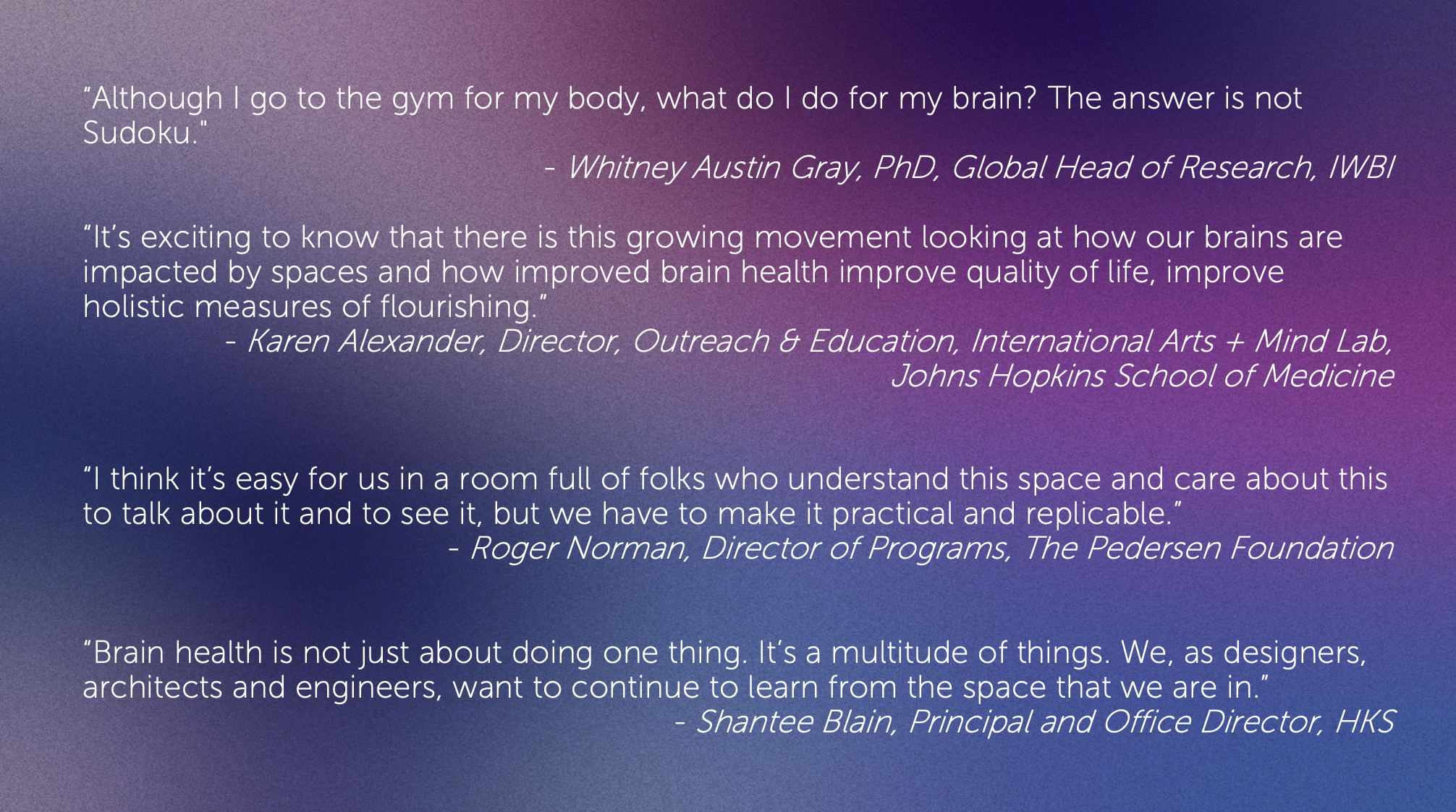
We go to the gym to strengthen our bodies. But what are we doing to keep our brains strong?
It’s a question I’ve been thinking about a lot lately, particularly as we navigate an increasingly complex world marked by cognitive overload, constant distractions and rapid advances in artificial intelligence. Are our brains adapting, or maladapting?
We talk about optimizing human performance, yet often overlook one of the most powerful influences on our cognitive health: the spaces where we spend more than 90% of our lives, inside our buildings.
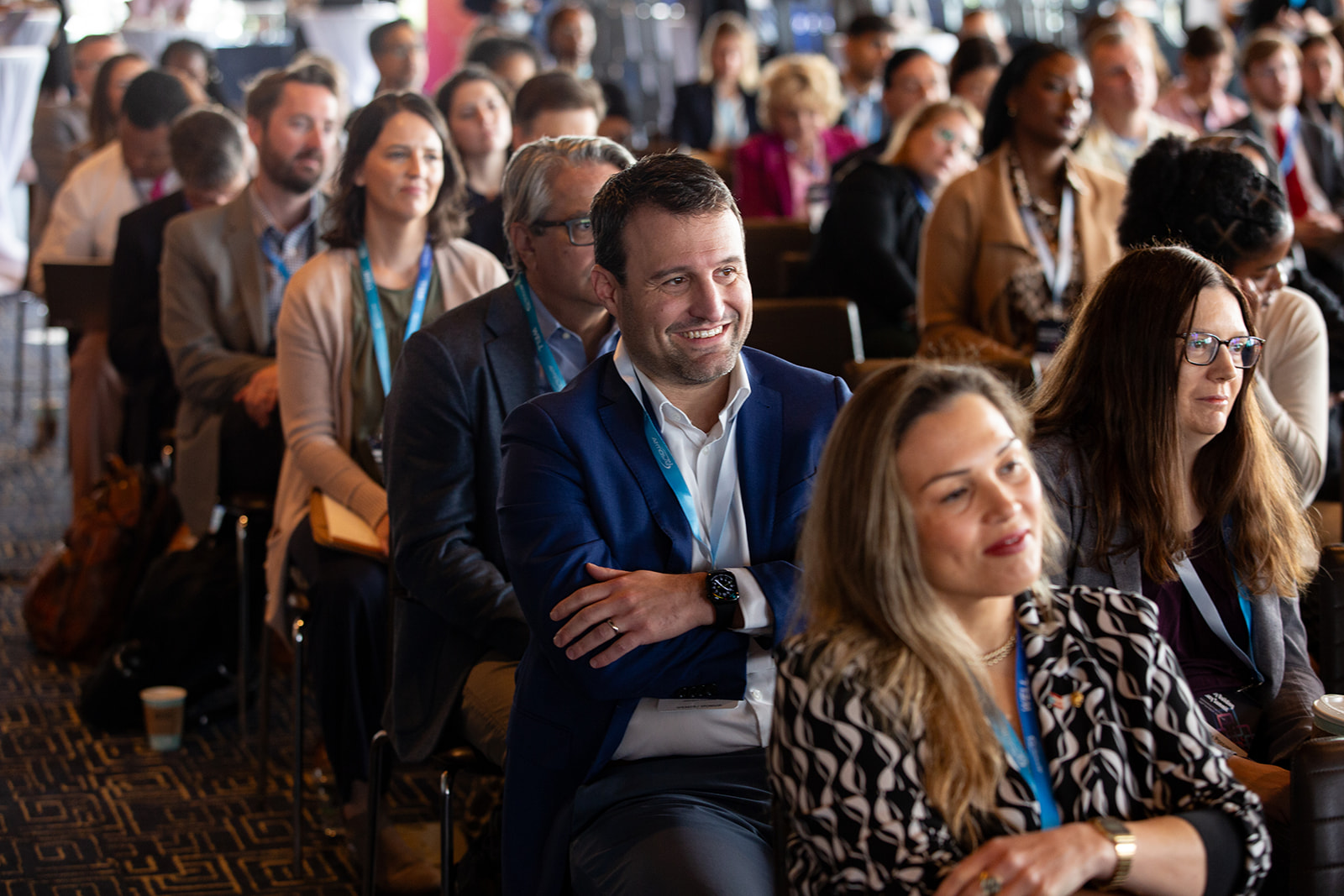
At the recent IWBI Healthy Building Policy Summit, I moderated a session entitled Building Better Brains: The Next Frontier of Healthy Buildings, a conversation with three leaders working at the intersection of neuroscience, philanthropy and design. Our discussion centered on a compelling opportunity: moving beyond buildings that simply protect us from harm toward environments that actively support brain health, cognitive performance and human flourishing.
What does that opportunity mean for our industry? At the summit, experts and pioneers in brain health shared how the building industry can put that science into practice.
Understanding how spaces shape our brains
Karen Alexander, director of Outreach and Education at Johns Hopkins School of Medicine’s International Arts + Mind Lab, introduced the emerging field of neuroaesthetics—the science of how aesthetic and artistic experiences influence our brains and bodies.
What excites me about this field is its potential to bring scientific evidence to what many of us experience intuitively: some spaces help us feel focused, calm and energized, while others leave us stressed or depleted. How can art support healing, and how do we measure its effects?
Karen highlighted the lab’s Intentional Spaces initiative and roadmap, which bring together neuroscience, architecture, design and other disciplines to translate research into practical applications.
One particularly important takeaway was the value of designing for all brains to be their best. Spaces that offer personalization, flexibility and choice can accommodate different sensory and cognitive needs while offering broader benefits.
Moving from evidence to investment and action
Roger Norman, Director of Programs at the Pedersen Foundation, brought another critical perspective: how philanthropy and strategic partnerships can accelerate progress.
Roger reflected on how the pandemic sharpened our awareness of the relationship between our environments and our ability to think, learn and manage emotions.
Today, research is helping us better understand and measure those relationships. The next step is putting that evidence into practice.
As Roger emphasized, the challenge is translating scientific findings into practical design processes, standards and strategies that can influence buildings at scale. Philanthropy can help catalyze that transition, but meaningful progress will require collaboration among researchers, policymakers, designers and industry leaders.
Putting brain health into practice
To illustrate how to design for brain health, Shantee Blain, Principal and Office Director at HKS, walked us through the firm’s new WELL Platinum Certified Washington, D.C. office.
The office brings brain health principles into everyday workplace design through abundant daylight, flexible work settings, collaborative spaces and areas dedicated to focused work.
One of my favorite examples was the office’s “quiet car,” a zone where employees can concentrate without phone calls, meetings or interruptions. Our brains need opportunities to engage deeply and then recover, yet too few spaces intentionally support both. Providing these opportunities is central to HKS’s work on brain health and its commitment through the Building Brains Coalition to advance brain-healthy spaces.
Equally important, HKS is treating the office as a living laboratory. Through employee wellness surveys and continued evaluation, the firm is exploring how its space can evolve to better support the people who use it. HKS has identified design strategies to support brain health, aligned them with WELL features and is evaluating the results. This approach creates a pathway from brain capital strategies to practice, not to mention a stronger evidence base.
A new frontier for healthy buildings
At IWBI, we believe the future of healthy buildings must include a more intentional focus on brain capital: investing in every brain to be its best. That means creating environments that accommodate different needs, support cognitive well-being and help people thrive throughout their lives.
It also means supporting industry leaders through thought leadership, case study research and partnerships that help translate emerging evidence into scalable design strategies.
As a research scientist, the moment research translates into action is what lights me up. I want to see findings move from the virtual bookshelf into the classrooms where our children learn, the workplaces where we spend our days and the communities where we live. This means that my son can focus with better air quality, my father can recover faster with views of nature in a hospital, and my colleagues report less fatigue, stress, and burnout increasingly defining our work hours.
Researchers and designers play a critical role in making that happen, and I am honored to work alongside them. When we design spaces using the principles of brain health, we go beyond doing harm, into promoting brain health. In the next era of work increasingly defined by artificial intelligence, how will we better invest in human intelligence?
We are at the crossroad to make brain health a fundamental consideration in how we design, operate and evaluate buildings.
I asked the audience during my panel session, and I’ll challenge readers of this article the same action-prompting question: What have you done for your brain today?
To learn more about “Building Better Brains: The Next Frontier of Healthy Buildings” and get in touch with us, scan the QR code below.