Leading with impact: How Alessandro Bisagni is shaping the future of healthy buildings
A pioneer in Asia’s healthy building movement, Alessandro Bisagni shares how the WELL AP credential deepened his impact, transformed his personal health journey, and inspired the creation of data-driven tools to future-proof indoor environments.
When Alessandro Bisagni first encountered the WELL Building Standard, it wasn’t through a textbook or training—he was in the field, guiding the first WELL Certified project in Asia. Since then, his work has helped drive the momentum for healthier buildings across Greater China and beyond. As a WELL AP, WELL Faculty member and founder of sustainable consultancy BEE, Alessandro has used the WELL framework not only to influence building design, but to improve lives—from the project teams he empowers to the health of his own family. In this Q&A, he reflects on nearly a decade with WELL: the lessons learned, the surprising challenges, and the exciting innovations shaping what’s next.
How did you first hear about the WELL AP? What made you interested in the credential?
I had the opportunity to work on WELL projects before the WELL AP exam was even available outside North America. Our team led the first WELL Certified project in Asia—the Haworth Shanghai Organic Showroom. This groundbreaking project introduced WELL in Greater China and helped ignite the region’s healthy building movement. At the time, the standard was still in its v1 pilot phase, which meant we had a unique opportunity to collaborate directly with IWBI—sharing feedback and adapting strategies to fit the local context. It was an exciting moment to be part of something transformative from the very beginning, and I’ve never looked back since.
What’s one way becoming a WELL AP has impacted your life and/or career?
When I founded BEE in 2009, China was experiencing the first waves of the “airpocalypse”—pollution levels were so severe that people were afraid to go outside. Back then, indoor air quality (IAQ) became the sole proxy for what people considered a “healthy building.” Becoming a WELL AP allowed me to broaden that narrative and help clients understand that human health in buildings goes far beyond air quality. WELL gave me the vocabulary and tools to explain and address other critical dimensions of health and well-being in design, construction and operations.
What are some things you’ve been able to do (or you plan to do) as a WELL AP you couldn’t before? Why are those things important to you?
WELL—especially as a Faculty member—has enabled me to bring truly diverse teams together around a shared goal: creating buildings that support health and wellness. Achieving this requires a holistic approach—not just in understanding the technical side of each feature, but also in involving departments and perspectives that might otherwise be left out of the process. For example, through WELL workshops I’ve helped engage HR departments in WELL strategies—conversations they aren’t usually invited into in a typical building project. This kind of cross-functional collaboration is what makes WELL so powerful.
Did anything about the WELL AP process surprise you—from registering for the exam to your experience post-accreditation? What was it? How would you prepare WELL AP candidates for that?
It’s hard to believe it’s been nearly 10 years since I took the WELL AP exam! I still remember how much memorization was involved—but in all seriousness, what really surprised me was how immediately useful the knowledge was. Unlike other rating systems where the exams are more theoretical and you often need an apprenticeship period to lead projects, the WELL AP exam gave me the practical insight I needed to start consulting on WELL projects right away.
What’s something about the WELL AP—or the WELL movement in general—that isn’t often discussed, but you think deserves more attention
People don’t often talk about how frequently projects fail at least one performance verification (PV) test on their first attempt—over half of them do. Becoming a WELL Performance Testing Agent completely changed how I advise clients. I now proactively assess how design and construction decisions will affect performance testing. Common oversights—like missing “Please Use the Stairs” signage, vague no-smoking policies that exclude e-cigarettes, poorly labeled cafeteria menus or sub-par air filters—can all jeopardize certification. These may seem small, but they’re fundamental. Attention to these details is essential if we want to see WELL succeed in practice—not just on paper.
Do you have any advice you’d give potential WELL AP candidates?
Yes—expect that your clients may not immediately understand the “why” behind every recommendation. Two things have helped me immensely:
Communicate the value proposition behind each feature using data to reinforce why it exists.
Emphasize the interconnectedness of WELL—showing how strategies influence multiple features at once.
Take the Light concept as an example. Features like Light Exposure, Visual Lighting Design and Circadian Lighting Design aren’t just about choosing light bulbs—they require conversations about space layout, glazing and heat gain, surface reflectance, and workstation ergonomics.
What does well-being mean to you? How do you incorporate it into your life and routine?
Well-being became very personal for me after I suffered long-term health impacts from COVID. I was particularly vulnerable to respiratory infections and experienced recurring pneumonia for over two years. That health journey forced me to take a closer look at how I live, and I began making major lifestyle changes.
One of the most impactful transformations came from the Nourishment concept in WELL. I eliminated ultra-processed foods, dramatically cut added sugars, prioritized fiber (especially diversity of fiber), introduced fermented foods and removed artificial ingredients from my diet. This approach helped me rebuild my gut microbiome—the foundation of my immune system. The change has been so profound that my whole family joined in. My 8-year-old daughters even teach their teachers about gut health now!

What projects do you have planned for the future? How will your WELL AP credential support the project’s success?
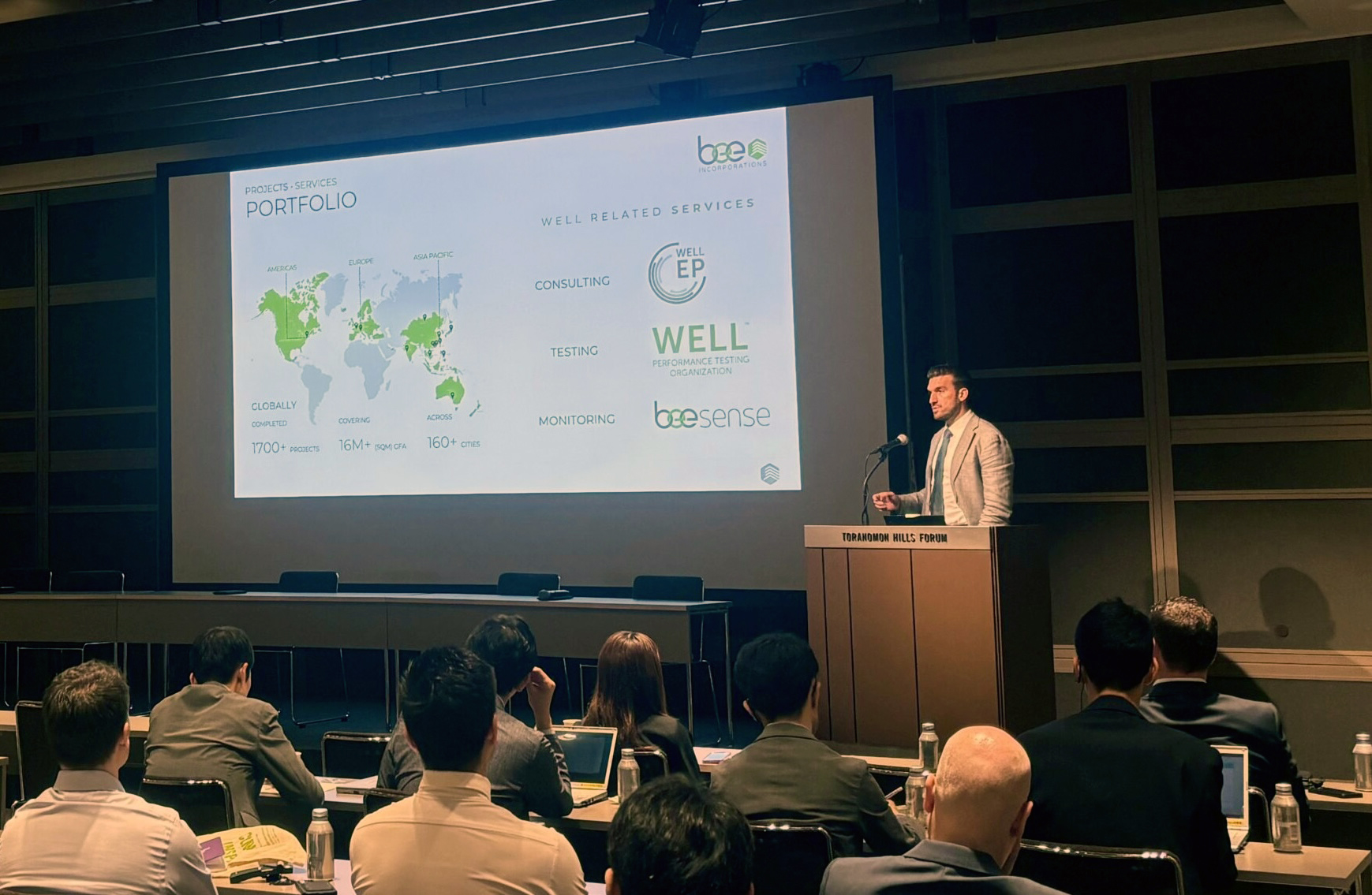
I’m especially excited about the development of BEE Sense, our integrated monitoring and analytics platform designed with WELL in mind. It already supports projects with air quality and thermal comfort monitoring that meets feature and performance testing requirements. Now, we’re expanding to include real-time measurement of light (including circadian metrics), sound and even preliminary water quality.
Our vision is to minimize the need for on-site PV testing while increasing real-time insights for building owners and project teams. With AI integration, BEE Sense will be able to analyze historical data and even predict future outcomes, helping clients take preventive action before indoor environmental quality (IEQ) issues arise. It’s a game-changer for how WELL projects can be implemented, managed and maintained.
Is there anything else you’d like to share?
My personal philosophy is that third-party certifications—WELL included—should never be the ultimate goal. They are tools to help us achieve better, healthier buildings, not ends in themselves. When project teams focus on implementing the right features—those that are most meaningful and relevant—the certification will come naturally. Trust the process, and focus on the impact, not just the plaque.
Learn more about what it takes to become a WELL AP!