IWBI Policy Roundup: Advocating for healthier people and planet
Welcome again to IWBI’s Policy Roundup, a quarterly article highlighting our work to advocate for policies that advance people first places worldwide.
It’s Earth Month, and the federal administration’s ambitious climate plans have demonstrated the significant potential of policy to address the critical ties between climate change and human well-being. In the spirit of Earth Day this week, we’ve focused this Roundup on how we’re supporting policies and cross-sector solutions that protect both planetary and human health. You’ll also find highlights from federal pandemic and infrastructure funding, and learn how we’re promoting workforce health, safety and equity.
We are excited to share this work and want to partner with you to amplify our collective voice, expand our reach and increase our impact. Join our global movement to transform the health and well-being of thousands of communities by emailing us at advocacy@wellcertified.com.
Now, on to the Roundup…
Encouraging Bolder Federal Investments in Health Equity
Highlighting the potential health impacts of the American Rescue Plan and American Jobs Plan and supporting even more ambitious action to promote health equity and resilience
On March 11th, President Biden signed into law the American Rescue Plan Act of 2021, a $1.9 trillion COVID-19 relief package intended to address the devastating economic and public health crises caused by the pandemic. The package includes nearly $130 billion for schools, over $40 billion for affordable housing and community development, and more than $350 billion to state, local and tribal governments, among numerous other investments aimed at helping those sectors and communities hardest-hit by the pandemic recover more safely. The law is a huge leap forward in supporting a safer, healthier and more equitable recovery from the pandemic. Read more in our breakdown of the American Rescue Plan.
The Biden administration quickly followed the American Rescue Plan with the March 31st introduction of the proposed American Jobs Plan, a $2.25 trillion package that aims to revitalize the nation’s economy and create millions of new jobs through sweeping upgrades to the nation’s aging infrastructure. While not passed into law, the Plan’s proposed investments could facilitate leaps forward in the well-being and resilience of communities across the country, including $10 billion in the modernization of federal buildings, $100 building in school upgrades, and $213 billion in the development and retrofitting of affordable housing. It also includes a $50 billion overlay for climate resilience, helping to fortify investments for more severe weather and climate risks that increasingly threaten lives and health. While supporting these investments in a healthier, equitable and more sustainable future, we continue to support ways the plan could do even more. Go deeper in our analysis of the American Jobs Plan.
Supporting Incentives for Healthier and More Efficient Infrastructure
IWBI supports the E-QUIP Act to encourage energy-efficient building retrofits that could protect human well-being
Buildings contribute to nearly 40% of energy-related CO2 emissions annually and play a significant role in determining positive or negative human health outcomes. But transforming buildings into efficient spaces that protect our well-being requires action from both policymakers and building owners to accelerate solutions across the commercial building sector. On April 1, Reps. Brad Schneider (D-IL-1) and Tom Rice (R-SC-07) reintroduced the Energy Efficient Qualified Improvement Property (E-QUIP) Act (formerly H.R. 8930) in a bipartisan effort to address this challenge head-on.
The E-QUIP Act would offer an accelerated tax depreciation on investments that increase the energy efficiency of commercial or multifamily buildings. According to an analysis by the American Council for an Energy-Efficient Economy (ACEEE), the Act could ultimately save $15 billion in energy bills and eliminate CO2 emissions equivalent to the annual emissions of 22 million vehicles.
In addition to supporting more investment in energy efficiency, the E-QUIP Act would also help these buildings better address indoor air quality by supporting HVAC, lighting, insulation and other systems that can lower COVID-19 transmission and help promote health by enabling better ventilation, indoor air quality, thermal comfort and daylight access. Moreover, the bill’s long-term reduction of emissions could support health equity by reducing the disproportionate health burden of air pollution on marginalized communities. That’s why our advocacy team collaborated with the ACEEE and Real Estate Roundtable (RER) to endorse the bill.

Urging Federal Action on Climate
IWBI facilitates discussion highlighting federal & local innovation on climate
As we mentioned in the last Roundup, IWBI recently launched a two-year collaboration with the National League of Cities (NLC) focused on empowering cities to embed health and well-being into the foundation of their communities. On March 9th at the NLC’s Congressional City Conference, IWBI’s EVP of External Affairs Jason Hartke moderated a session spotlighting how cities and the federal government can collaborate to drive impactful solutions to the climate crisis.
Jason facilitated the discussion, “Climate Change: From City Leadership to Federal Action,” with Mayors and federal administrative representatives. The conversation explored how the federal government, with renewed focus on climate under the Biden administration, can provide stronger support for bold local climate action, which can in turn enable both people and planet to thrive. Last week, over 300 businesses published a letter calling on the administration to commit to reducing emissions to “at least 50% below 2005 levels by 2030,” in anticipation of the White House’s virtual climate summit from April 22-23 ahead of November’s COP26, or 26th Conference of Parties global convening to address climate change.
As our advocacy team drives discussions on climate action, our Research team is also leading the conversation through the Global Research Agenda’s first impact topic, climate change and human health. Watch the webcast here.
Advancing Integrated Solutions through the UN Sustainable Development Goals
IWBI evaluates evidence-based connections between WELL and the SDGs
The past year has highlighted more than ever that health, sustainability and socioeconomic equity are inextricably linked. Businesses have a critical responsibility to advance integrated solutions that protect human and planetary well-being while addressing systemic disparities. In 2019 we joined the United Nations Global Compact to demonstrate to our global community that we are committed to doing well by doing good.
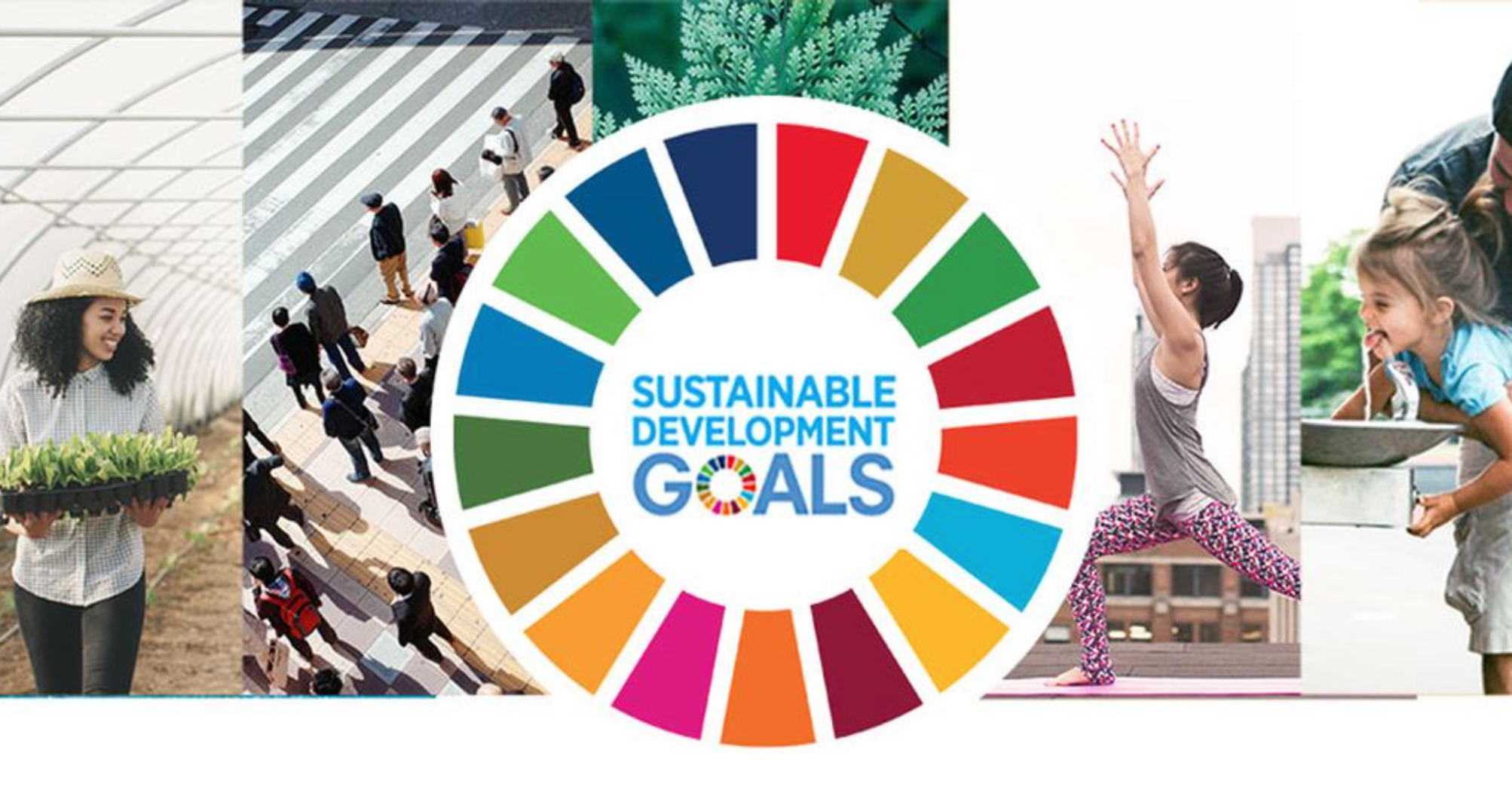
As part of that commitment, this year we undertook a robust process to identify which strategies in the WELL Building Standard (WELL or WELL v2) and the WELL Health-Safety Rating help contribute to the United Nations Sustainable Development Goals (UN SDGs). The SDGs set 169 specific, measurable targets across a range of interdependent social, economic and environmental issues and have been increasingly recognized as a benchmark for corporate leadership in environmental, social and governance (ESG) practices. The powerful level of alignment between WELL and the SDGs demonstrates the multi-faceted impact of WELL at scale in advancing a healthier, resilient and more equitable future. Go deeper: view specific WELL-SDG alignments.
Joint Statement to WHO Helps Deliver Roadmap Document on Better Indoor Ventilation to Fight COVID-19
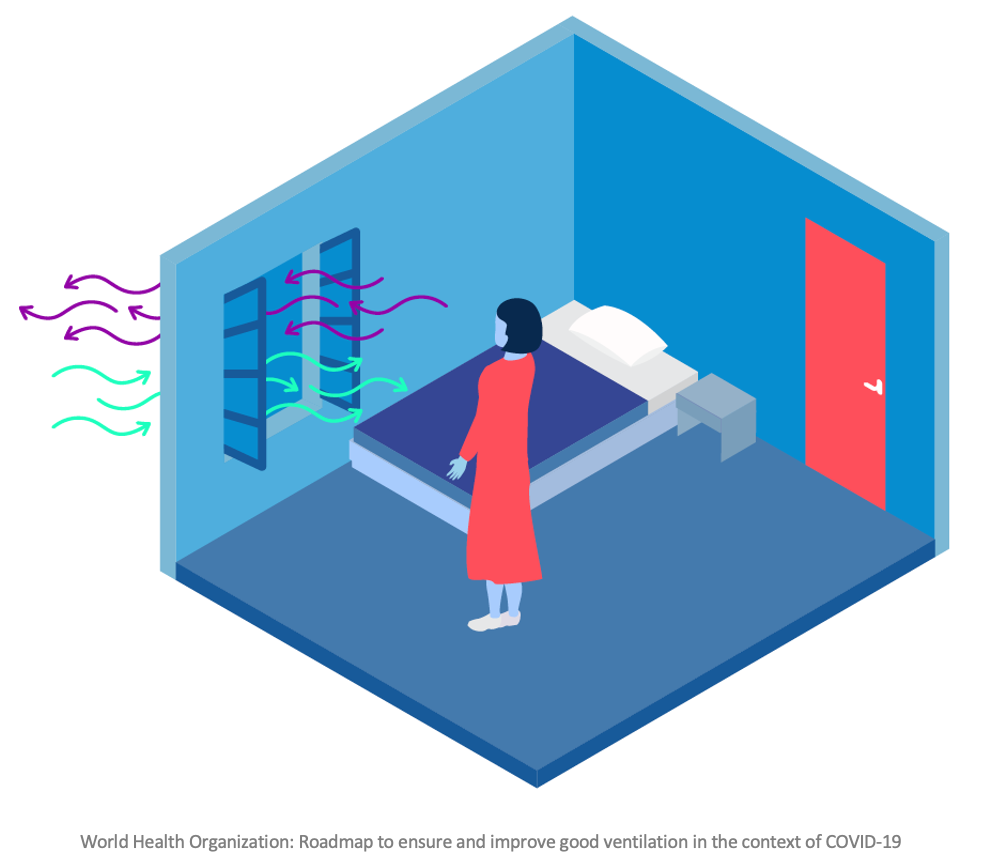
In summer 2020, a group of built environment experts supported by IWBI delivered a call to action urging enhanced guidance on the role of buildings in addressing COVID-19. More than 680 built environment experts from 51 countries cosigned a statement delivered as a petition to Dr. Tedros Adhanom Ghebreyesus, Director General of the World Health Organization (WHO), urging public health leaders to adopt and advance indoor environment best practices, and calling for enhanced guidance on the role of buildings in keeping communities safe from airborne viruses such as SARS-CoV-2. On March 1, 2021, the WHO did just that, issuing its Roadmap to improve and ensure good indoor ventilation in the context of COVID-19, and proving the power of expert voices to influence change.
Joyce Lee, FAIA, WELL AP, LEED Fellow, President, IndigoJLD and senior advisor to Econsult Solutions
Promoting Employee Health through Corporate Accountability
IWBI advocates for organizational transparency around employee health, safety and equity
IWBI’s mission is to help buildings, organizations and communities put their people first. That’s why we’re serving as a resource to support ways to better encourage this type of transparency, such as through the Workforce Investment Disclosure Act. The bill, introduced by Iowa Representative Cynthia Axne, would be the first federal legislation to mandate corporate transparency on employee health and well-being policies.
The Act would require companies with reporting obligations to disclose their operations related to employee physical and mental health, safety, diversity and inclusion, engagement and compensation to the Securities Exchange Commission (SEC). Compelling businesses to report on employee support practices at this scale would be transformative. The bill would incentivize employers to identify and address gaps in their policies, potentially spurring powerful investments in workforce health, safety and equity. Market leaders, in turn, would be recognized for prioritizing the needs of their workforce.
Our team is supporting ways e to help strengthen the bill, drawing on the science and evidence that helps inform strategies embedded in the WELL Building Standard (WELL). As human health gains recognition as material to a business’ bottom line, human-centered policy interventions offer best practices across all of the Act’s disclosure areas.
In addition to supporting increased legislative activity in this area, IWBI is also driving discussion with the corporate sector on how to align profit with purpose through our Investing for Health platform. Join the conversation.
Connect with us
Interested in learning more about our advocacy work or in collaborating with us to advance policy that helps everyone thrive? Reach out to us at advocacy@wellcertified.com and sign up here to receive regular updates. We look forward to connecting with you!
Postscript
Last week, President Biden released a proposed $1.5 trillion budget that included sizable increases across key agencies and federal activities that could help better support and accelerate health and well-being. More on that soon.