The Power of a City
Designing urban life around well-being isn’t a dream–it’s a decision

In any given city, there’s literally heaps of buildings. It sounds like an oversimplified statement, but it illustrates the scale and scope of opportunities in urban environments.
Today’s cities are navigating a cascade of challenges–from climate disruption and public health recovery to chronic underinvestment and workforce gaps. And yet, within these complexities lies an incredible opportunity. Cities can be more than hubs of economic activity or centers of innovation. They can be catalysts for human health, equity and resilience.
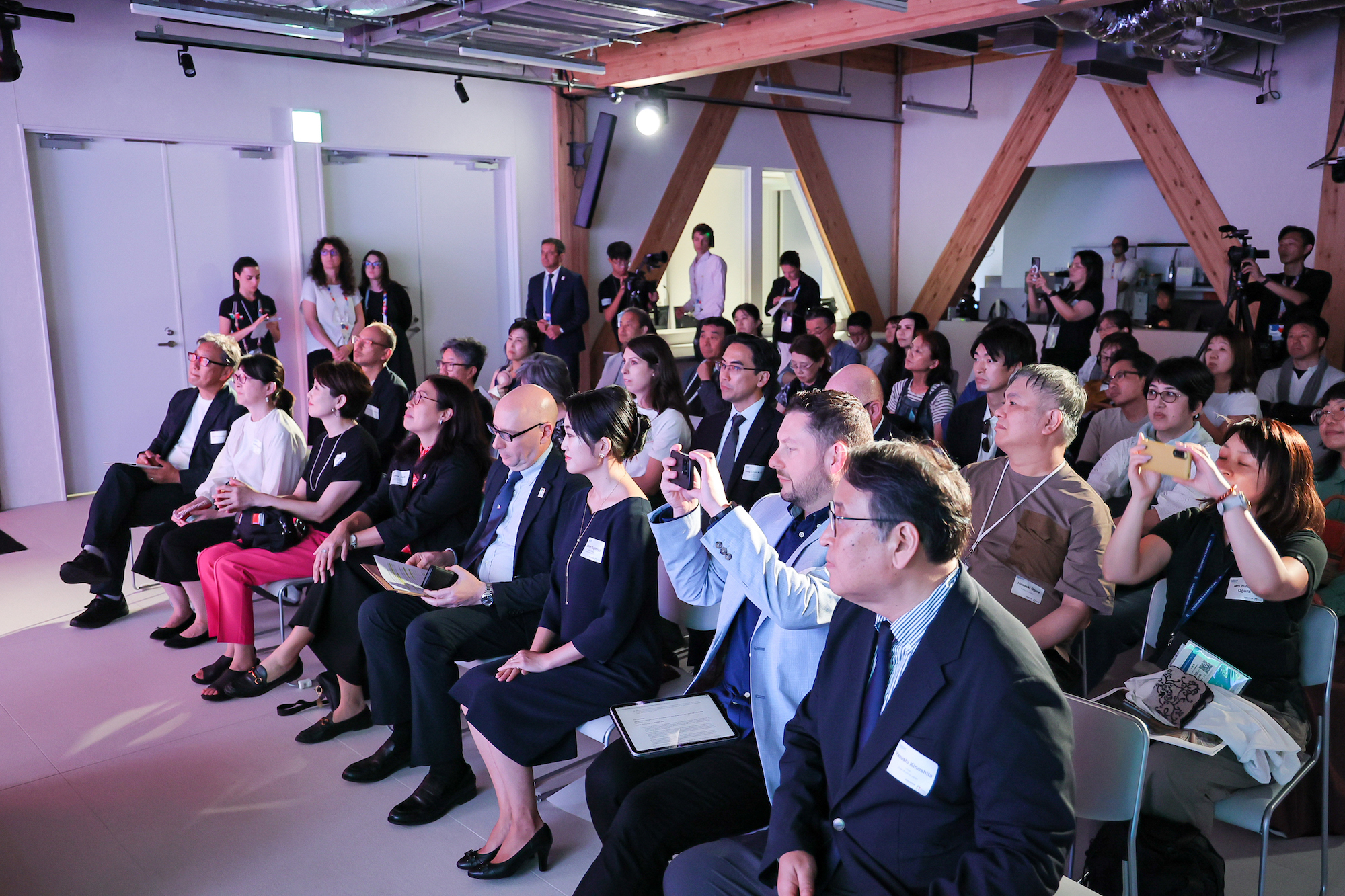
That was central to a recent discussion I took part in, “Designing for Well-Being: Building Healthier Cities for All,” co-hosted by the Italy Expo 2025 Osaka Pavilion through the Italian Ministry of Foreign Affairs and the Singapore Pavilion by the Singapore Tourism Board in celebration of 60 years of diplomatic relations between the two incredible nations. It was the perfect space to ask: “How can we create cities that are more human, more inclusive and more regenerative?”
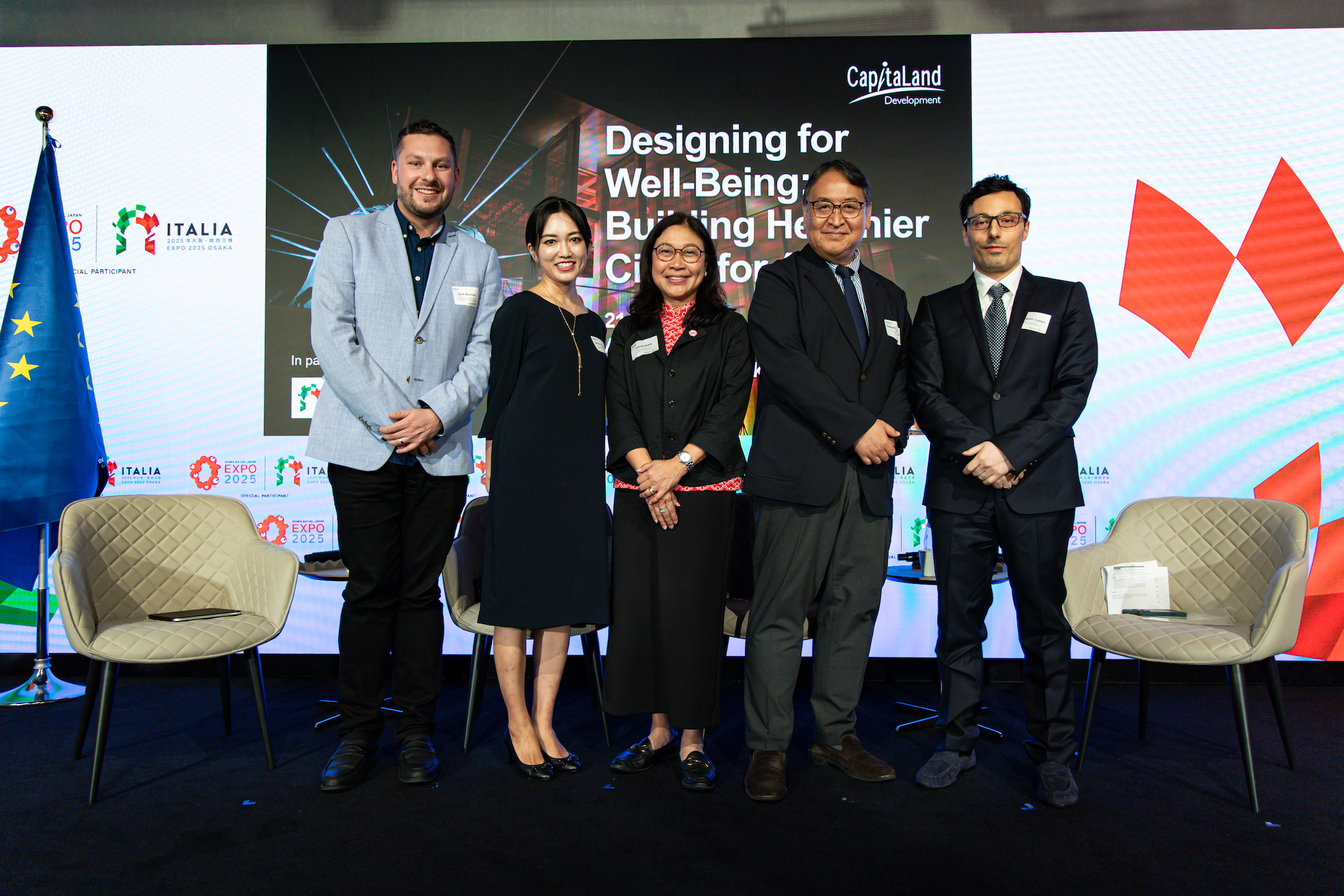
Jack Noonan, Senior Vice President APAC, International WELL Building Institute (IWBI); Shiori Kugimiya, General Manager, Mitsubishi Estate Asia Pte. Ltd.; Carrie Kwik, Executive Director of World Expo and Special Projects, Singapore Tourism Board; Yasushi Kinoshita, Chair, Green Building Japan (GBJ); Moderator: Giovanni Cossu, Head of Sustainability – CapitaLand Development (CLD)
Design has always shaped behavior and experience. What’s changing now is how deliberately we’re using design to prioritize health and well-being at scale. Cities that are intentional about this–embedding health into infrastructure, public spaces and governance–are not only improving quality of life, they’re building long-term resilience.
Science-based frameworks, like the WELL Standard, offer flexible tools that translate big-picture public health goals into real, tangible improvements in people’s lives. They allow local governments and organizations to hardwire well-being into places and policies, and to measure their progress in doing so. Indeed, more and more cities are now stepping up to lead by example by ensuring their municipal buildings are walking the talk by achieving WELL.
Of course, our understanding of health continues to evolve. In recent years, attention has grown around mental health, social isolation, labor equity and emergency readiness. Cities that embrace these issues and respond with thoughtful design and policy will be better positioned to withstand future shocks and support their residents in meaningful ways.
What’s encouraging is that these ideas are gaining traction; not only in major capital cities, but also in smaller communities and unconventional spaces. From performing arts venues to transportation hubs to workplace hubs that emphasize biophilia and cultural identity, there’s a growing recognition that well-being should be a design priority, not an afterthought.
Ultimately, the strength of a city lies in how well it supports the people who live in it. We have the tools, knowledge and momentum to design cities that serve not just economies or systems, but individuals and communities.
The choice ahead is whether we do so with intention. Because when you design a city for people, you harness its true potential.
View the panel on YouTube, as well as a recap video on LinkedIn.