The Democratization of Health: Let’s Focus on What Matters Most
This year, we’ve all felt the ground move beneath us as the pattern of our lives has been disrupted by the many physical, mental and emotional challenges posed by the COVID-19 pandemic.

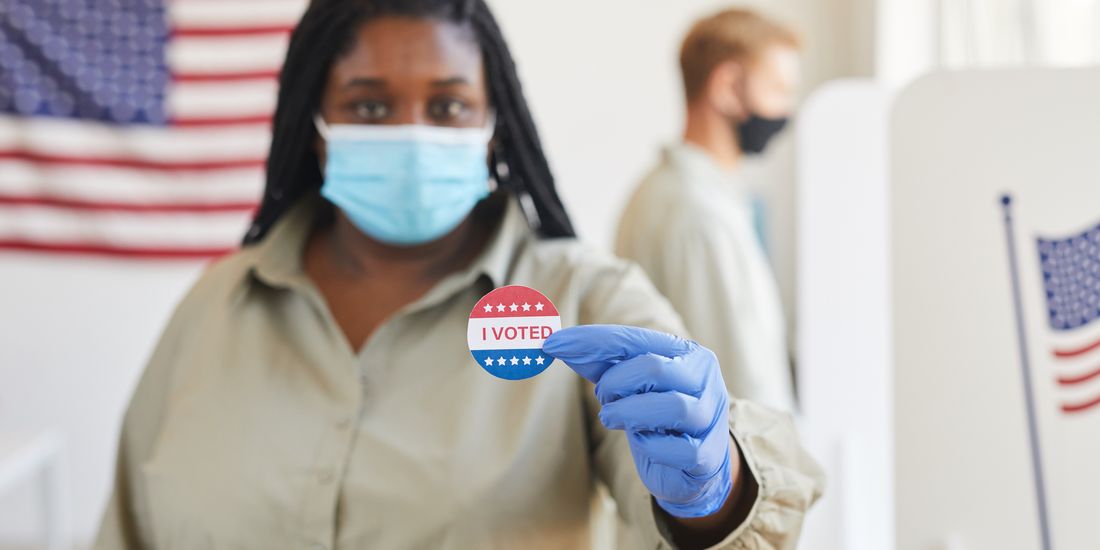
Here in the United States, we’ve experienced a number of additional pressures including a divisive election campaign that has seen emotions and political rhetoric run high. One positive we can all take from 2020 is record voter turnout – a feat made all the more astounding because it was achieved during a period when taking part in the democratic process itself carried very real dangers to voter health.
The numbers are unprecedented. As of November 4, the statistics show that more than 66 percent of the eligible voting population in the US participated in the 2020 presidential election. When the dust settles, the total number of votes cast for all presidential candidates will be somewhere around the 160-million mark. It’s uplifting to reflect that across the country people took a stand, not only for their country but for democracy itself.
The campaign to increase voter participation can teach us much. Although voting is a fundamental right of citizenship, we know that many don’t routinely exercise this right. Black, Latinx, and Asian-Americans not only vote at a lower rate than white Americans but, because of generally poorer levels of healthcare and support, they’re also more likely to develop the health conditions that further reduce their likelihood of voting.
The increase in voter numbers this year was partly due to widespread action by grassroots organizations and volunteers to increase turnout among historically under-represented population groups. By engaging underserved communities in the political process, a range of well documented inequities can be addressed more directly.
So many of these imbalances are inarguably linked to social determinants of health (SDH) over which many people have little choice. And these deeply ingrained structural inequities are hard to counter without fundamental shifts at the community scale - as well as shifts in policy at every level of government and in places of work. Factors such as where we are born, grow up, work, and live are compounded by the weighted economic, political and social systems that limit an individual’s ability to improve their situation.
Although a pandemic like COVID-19 exacerbates existing inequities, it is thoroughly apolitical, affecting Democrats, Republicans and Independents alike. It does, nonetheless, choose favorites. The pandemic has taken the heaviest toll on low-income families and marginalized communities: yet another reminder that the people who have the least, almost always suffer the most.
The virus rode in on the backs of centuries of racism, oppression and injustice. It reminded us once again that clean air, access to healthcare, sufficient housing and quality education are basic human rights that many Americans are denied.
To add insult to injury, the communities that are disproportionately affected by COVID-19 are the same ones that are most affected by the devastating impacts of climate change, demonstrating how deeply rooted the conversation about equity and justice is in public health. Here in the US, and across the world, we must ask ourselves: if we believe everyone has a right to ‘life, liberty and the pursuit of happiness’, why aren’t we making good on that promise?
The World Health Organization (WHO) defines health equity as ‘the absence of unfair and avoidable or remediable’ differences in health. It’s surely unthinkable that the deltas that exist can’t be remedied in one of the wealthiest countries on earth.
We have the power to change the future by building on this new momentum for social good. By adapting strategies that have been so successful in recruiting new voters to engage millions more in the battle for greater well-being. By recognizing the profound impact of health inequities in our communities and by acting decisively to protect the most vulnerable among us.
So, let’s redouble our focus on the pursuit of equity. As I step into my new role as CEO at IWBI, the democratization of health will be my highest priority. The pursuit of diversity, equity, inclusion, accessibility and justice will be my North Star because everyone deserves the opportunity to live the healthiest version of their life.