Health literacy in action: How Wojciech Tworek transforms spaces and habits
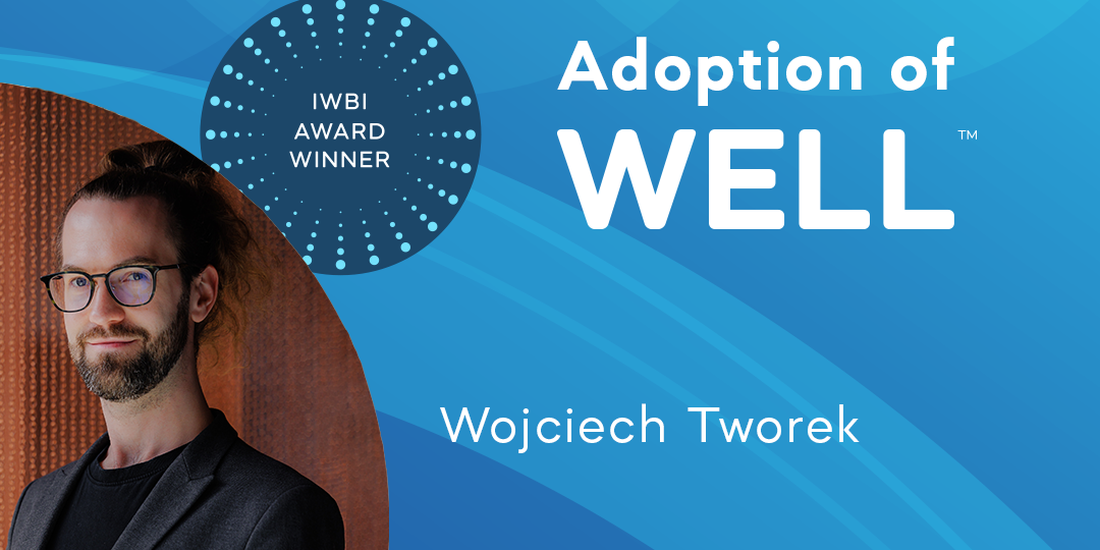
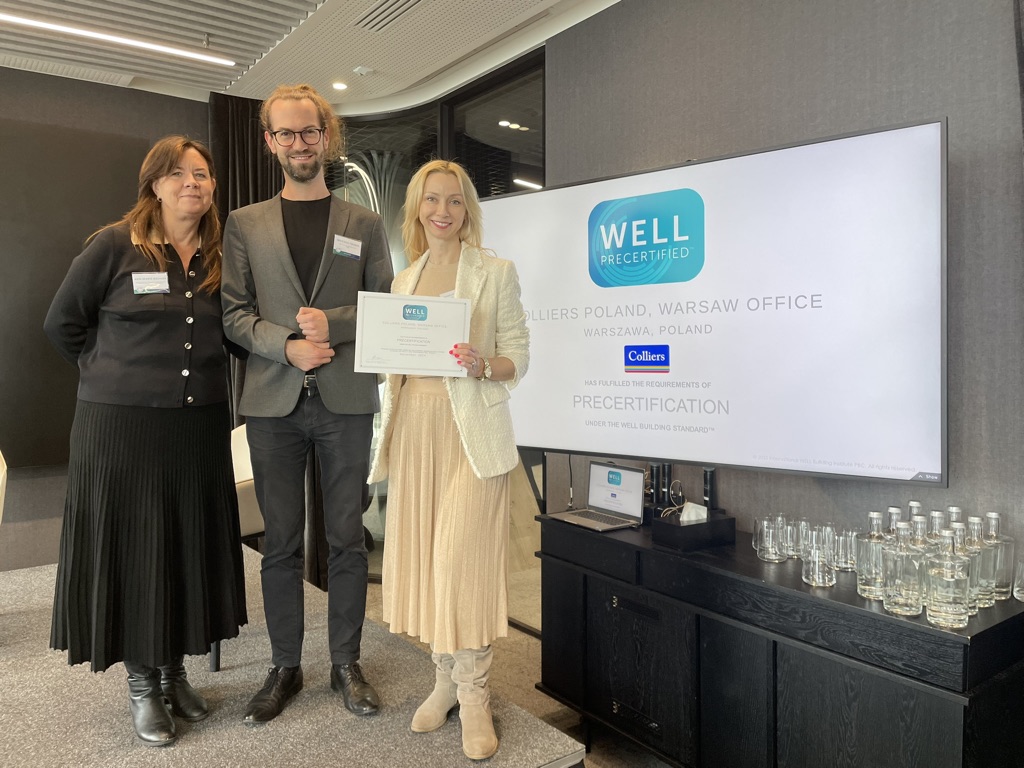
Senior Associate at Colliers, Poland and recipient of the 2024 Adoption of WELL Award, Wojciech Tworek shares how health literacy shaped his approach to well-being and the built environment.
An advocate of research-backed approaches, Wojciech Tworek has leveraged WELL to impact everyday choices through powerful “nudges” that promote healthier behaviors across built environments. He reflects on how WELL has transformed his personal and professional perspective on creating health-focused spaces while inspiring meaningful lifestyle changes.
A Nudge Toward Health: Why WELL AP Is More Than Just a Credential
I strongly believe in health literacy and behavioral science. These two concepts underpin several strategies recommended by the WELL Building Standard. By acknowledging and understanding them, WELL Accredited Professionals are more likely to help create healthy conditions for others – and often make healthier choices themselves.
Health literacy is the ability to find and use knowledge about our health and what affects it. It empowers people to take control of their health, manage illness and prevent problems before they start. But quite often, we already know what is good for us – and still don’t act on this knowledge! What we often need is a subtle push in the right direction that helps us make better decisions. Various interventions designed to direct us are called ‘nudges’, and they are derived from behavioral science.
How WELL Started to Shape My Thinking
Becoming a WELL Accredited Professional has shaped both my career and my personal life in meaningful ways.
Studying for the WELL AP exam made me realize how many factors in our direct surroundings affect our health and wellbeing in various ways. The ‘Intent’ and ‘Background’ sections of each of the ten WELL concepts are a powerful source of information on these factors. This publicly available resource is an amazing handbook – comprehensive and accessible at the same time.
It was only during my exam preparation that I fully understood the importance of regular hydration. Something as simple as this can help prevent headaches. Since then, I’ve developed a habit of drinking several glasses of water throughout the day and try to encourage my colleagues to do the same.
The Science Behind Everyday Choices
Becoming a WELL AP also ignited my interest in reviewing scientific literature. I found myself reading more independent research papers and began diving deeper into topics like the effect of CO₂ levels on cognitive performance or the neuroscience behind the impact of biophilic design and natural plants on mood.
This curiosity has helped me provide better, more evidence-based advice to clients. Being able to refer to research allows clients to better justify investments in healthy working conditions.
What I especially appreciate is how WELL encourages projects to include simple, practical design solutions – often virtually cost-free – that help people act in healthier ways without even thinking about it. For example, feature V03.3 “Promote Visible Stairs” makes it easier to choose stairs over elevators and add a daily dose of moderate physical activity, which is crucial for preventing cardiovascular diseases.
Placing a water dispenser close to workstations makes it more likely that people will hydrate regularly.
On the other hand, reducing the visibility and accessibility of sugary snacks helps to avoid unhealthy temptations. It’s easier if there’s no vending machine with chocolate bars in sight, or if a healthy alternative is prominently available, as required by the WELL Nourishment concept.
Looking at spaces with WELL recommendations in mind helps us realize how much our surroundings can quietly shape our decisions.
One of the things I love most about WELL is how it promotes the synergy between the built environment and policies and programs that support health. Personally, I only managed to start working out regularly after a gym opened in the office building where I worked – and the membership was sponsored by my employer. This combination of physical amenity and employee benefit is exactly what’s encouraged by WELL feature V08 “Physical Activity Spaces and Equipment” from the Movement concept. It showed me firsthand that built environments and health-focused policies are most effective when they go hand in hand.
Helping the Small Things Matter
Many of these solutions don’t require much money or effort. But in the typical rush of a project, small but meaningful opportunities are often missed – unless someone is there to notice them. That’s where a WELL Consultant can really make a difference. These small changes can significantly improve daily working conditions, often in ways people don’t even consciously register.
Being a WELL Consultant has turned out to be incredibly fulfilling for me. There’s something deeply satisfying about knowing that each project, and even each small recommendation, might contribute to someone working or living in a healthier environment. And maybe even starting their own journey toward an entirely healthier lifestyle. Just like learning WELL started mine.
Learn more about what it takes to become a WELL AP!