Tackling Racism: Let’s Break the Cycle of Hatred
On the face of it, the US is steadily becoming more racially and ethnically diverse. The latest estimates from the Census Bureau (2020) show that nearly four out of ten Americans identify with a race or ethnic group other than white, with 27 of the country’s 100 largest metropolitan areas – including New York, Los Angeles and Washington, D.C. – already having minority-white populations.

That we’re living in a rapidly evolving society makes me more hopeful for the future – until I hear yet another news story about racially fueled violence. The recent tragic shooting in Georgia, resulting in the deaths of six women from the Asian community, hit me and everyone at IWBI hard.
There’s nothing new about racially motivated violence against Asian people. Asian communities have been unjustly targeted during periods of tension or crisis throughout our country’s history – most memorably during World War II with the internment of Japanese Americans in concentration camps. It’s a pattern of scapegoating that’s currently being replayed in the wake of the COVID-19 pandemic.
The statistics are alarming. Since the beginning of the pandemic, there’s been about 3,800 firsthand reports of violence, discrimination and harassment against Asian Americans – our friends, neighbors and colleagues – including more than 500 incidents in just the first two months of 2021.
At IWBI, it’s an issue that’s close to home. Not only because five of our Asian colleagues here in the US have been on the receiving end of harassment recently, but also because we value our global community and know we owe a huge debt of gratitude to our China team, in particular, for the speed of IWBI’s COVID-19 response.
The pandemic impacted communities in China two or three months earlier than the US. In January 2020 our China team, who were already living in lockdown, scoured the WELL Standard to identify strategies and interventions that would support the COVID-19 response, deploying buildings to help slow transmission.
They quickly produced webcasts – at their peak attracting up to 110,000 viewers per session – on topics ranging from ventilation and filtration to cleaning and sanitization. They pulled in medical experts, academics and leaders in epidemiology who, at the time, had a better grasp than anyone in the world on this novel coronavirus and how it was spreading. We are immensely grateful for the valuable head start we gained in acknowledging the role buildings would play in the pandemic and understanding how IWBI was uniquely positioned to help.
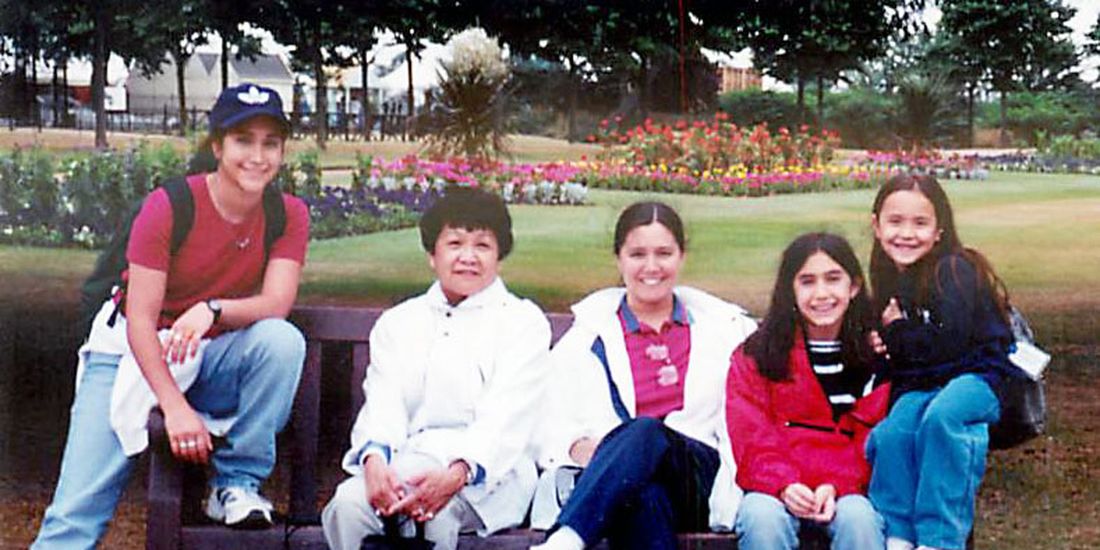
I keep thinking about how my Chinese grandmother would feel today. She was on the receiving end of the same variety of prejudice that my Asian colleagues and family members are suffering today. She believed she had fought these battles so we wouldn’t have to. That Asian Americans would still be facing the same verbal abuses, even physical violence, decades later would have been unthinkable to her.
What can we do? We can speak up, individually and collectively. We can continue to voice our support for the Asian community, calling out racist comments and engaging individuals with a different perspective in compassionate conversations. We can be present and alert to what’s happening in the street, on the subway, in the grocery store, in our own neighborhoods. We can be better friends, colleagues and allies.
Hundreds of volunteers from around the world serve on our various Advisories to help us to translate research to practice, codifying evidence into actionable strategies that can deliver change. Through IWBI’s Health Equity Advisory, we’re currently looking at the many overt and subtle ways organizations can create safer, more inclusive and welcoming places for all. In particular, marginalized groups that have so often felt unwelcomed, excluded or even unsafe.
In the end, we can’t solve anti-Asian racism in isolation; we have to address racism against all people, wherever we find it. We have to ask ourselves the tough questions. What do we need to do to break the cycle, to protect each other, to be part of the change we seek? How can we learn from this moment and forge a new path forward?