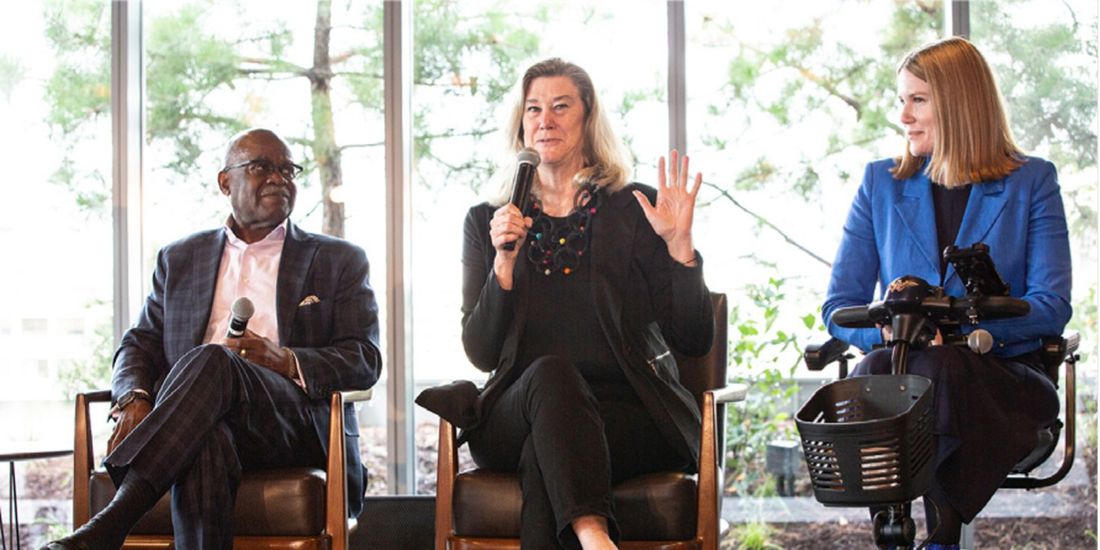
IWBI Signature Interview Series: Rethinking Workplaces—A Conversation on Designing Better Spaces through a Neuroinclusive Lens
IWBI sat down with Kay Sargent, an award-winning author and renowned design leader who is championing neuroinclusive workplaces

Kay Sargent has been a longtime design leader at the well-known global architectural firm HOK. As Director of Thought Leadership for Interiors, she has spent her professional life focused on transforming workplaces to help all people thrive. Her work sits at the intersection of architecture, human behavior and inclusive design—fields that are gaining new urgency as organizations prioritize spaces that support health, well-being and belonging.
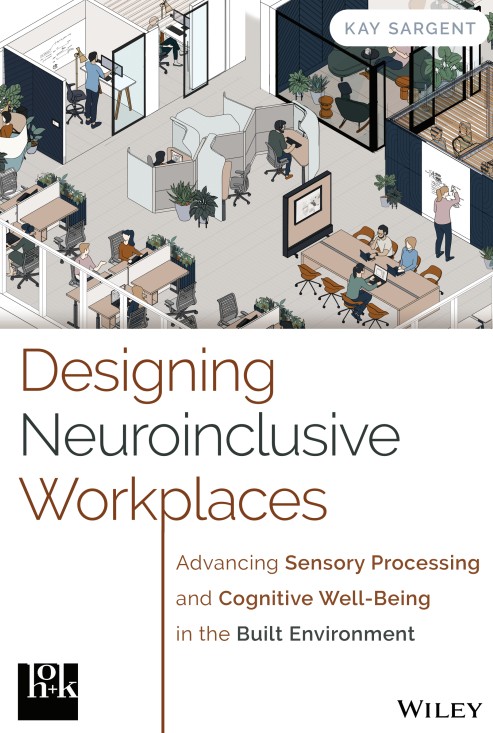
Yet, too often, our workplaces lean toward averages, leaving out those whose cognitive or sensory needs may be different. As Sargent says in her recent award-winning book, Designing Neuroinclusive Workplaces: Advancing Sensory Processing and Cognitive Well-Being in the Built Environment, design decisions that might just be inconvenient for some can be outright exclusionary for neurodivergent people, hindering their participation, productivity and well-being. In her book, offering both practical guidance and new thinking, she shows how to design spaces that support neurodivergent individuals while helping everyone thrive.
Kay brings deep credibility and insight to this topic. She sits on notable advisory boards, works closely with health and sustainability advocates and was recently honored with the IFMA Distinguished Author Award for her research on neurodiversity. In this conversation, we sat down to explore the insights behind her book, what organizations can do to improve workplaces and how we can all help to create spaces where every mind can thrive.
Q: Early in your book, you reflect on your own family— and the different experiences of your children—and the role it played in shaping your perspective. Please tell us how those reflections inspired you to not only write this book but also take up a professional commitment to advance neuroinclusive design?
You might find it surprising, but the unique experiences of my five children weren’t the catalyst for starting our deep dive into the topic of neuroinclusion. It started with an inquiry from a client regarding how to design spaces for ADHDers. But not far into our research we realized that sensory stimulation in the built environment is impacting all of us. Having had two of my five kids diagnosed as neurodivergent made it personal, and something I could relate to and draw from.
Once we completed the first research report, we realized there was so much more to unpack and discover, so we launched a series of surveys, research initiatives, interviews, workshops and pilots. Eight years later, we had so much material that when asked to write the book, we thought it was important to do so. Early on, the firm decided that this topic served as a fundamental basis for how we should be designing and felt there was a moral imperative for us to embrace and share with others. And today, all of us here at HOK are as committed as ever to continue learning, researching and evolving our understanding so we can create spaces where all can thrive.
Q: Your book weaves together client stories, expert insights and your own experiences. Professionally, was there a turning point that reshaped how you approach workplace design?
I’ve been on a 40-year journey exploring workplace design and strategy. But once we started to ideate solutions for inclusion, all that work collided with our research on neuroinclusion and helped us create a more comprehensive, holistic approach to designing spaces. We truly embrace the science along with the art of design.
Q: Your book explores the workplace across six distinct modalities—from focus to collaboration. Which of those do you think is most misunderstood or neglected in today’s office environment and what changes do you recommend to better support it?
Our research identified the six types of activities or modalities of work that we do:
- Concentrate / Focus: Spaces for deep, focused work
- Contemplate / Refresh: Areas for reflection and refreshment
- Commune / Process: Locations for processing and collaboration
- Create: Environments that foster creativity
- Congregate / Meet / Learn: Places to gather
- Convivial: Zones for socializing
The number of settings needed for each modality may vary per organization, based on the nature of your work, but ideally, every space would provide some of each.
Our research revealed that 50-60% of respondents to our surveys report that they spend most of their time doing solo work, either concentrative or commune/process work. But people need time to contemplate and refresh – to process what they have heard or recover from an intense meeting or extended focus period, or just to think. But space to do so is often limited, if available at all. That adds to our inability to recharge and leads to increased anxiety, burnout and loss of engagement. We need to create spaces for people to refresh or take a minute to think. Small alcoves off to the side, access to natural settings and casual spaces to reflect can improve our cognitive and sensory processing and help refresh our bodies and expand our ability to ideate.
Q: What’s one piece of advice you’d give organizations looking to create more neuroinclusive workplaces?
You can’t meet the unique and varied needs of the workforce today with standardized, generic solutions. One-size misfits all. Work is complex, so to create spaces where the wide array of functional, cognitive and sensory needs can be met means we need to provide options and variety, choice and some degree of control. We need to create spaces that empower individuals.